

There are some flavors that don’t simply taste good—they feel like coming home.
The first cool morning of autumn has a way of changing everything.
The windows crack open. The air smells different. The days begin getting shorter, and suddenly we find ourselves reaching for sweaters, warm mugs of coffee, and recipes we haven’t thought about since last fall.
And then there are the smells.
Cinnamon.
Baked apples.
Brown sugar.
Vanilla.
Nutmeg.
Cloves.
Warm butter melting into something fresh from the oven.
Those aren’t just ingredients.
For many of us, they’re memories.
At Not Your Grams Kitchen, we believe food has always been about more than simply filling a plate. Food carries stories. It carries traditions. It reminds us of people, places, seasons, celebrations, and sometimes even a kitchen we haven’t stood in for years.
And few seasons tell those stories quite like fall.
🍎 The Apple: Autumn’s Oldest Friend
There may not be another fruit more deeply connected with American baking than the humble apple.
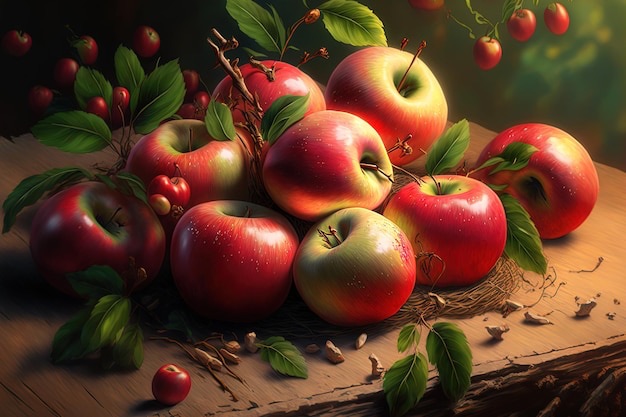
Apples were being planted by English colonists in the American colonies surprisingly early, with orchards producing fruit by the 1630s. Apples weren’t simply eaten fresh. They were dried, stewed, preserved, turned into cider, and baked into pies. (Pilgrim Hall Museum)
That versatility made the apple incredibly valuable.
Nothing needed to go to waste.
A bruised apple could become sauce.
Apples that weren’t perfect for eating could be dried.
Excess apples could become cider.
And when the weather turned cold, those same apples could become pies, cakes, fritters, dumplings and countless other desserts.
The apple wasn’t merely an ingredient.
It was a way of preserving summer for the months ahead.
🍏 Apple Butter: A Tradition That Took Patience
Few foods represent old-fashioned fall cooking quite like apple butter.
And despite its name, there isn’t actually any butter in apple butter.
The word butter refers to its smooth, thick, spreadable consistency.
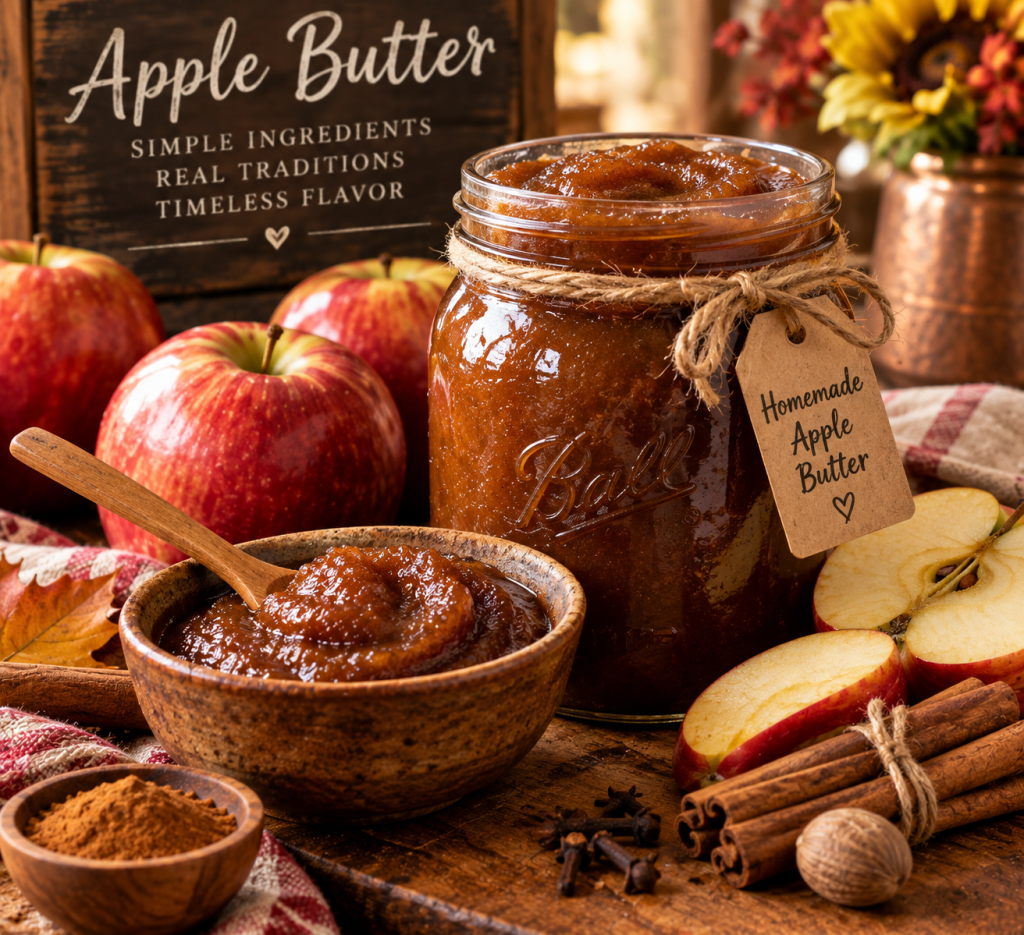
Traditional apple butter was made by slowly cooking apples down until their water content was greatly reduced and the mixture became thick, dark, concentrated and intensely flavored. Cinnamon, cloves, nutmeg, ginger and other spices could be added depending upon the recipe and region. (NC Historic Sites)
And historically, making apple butter wasn’t exactly a quick afternoon project.
Large batches could require hours of cooking and almost constant stirring to prevent the mixture from scorching.
In parts of Appalachia and the American South, apple-butter making could become a community or family event, with large kettles and long wooden paddles doing the work while people gathered around them.
Imagine that for a moment.
A crisp autumn day.
A fire burning.
A giant kettle of apples slowly cooking.
The smell of cinnamon and cider filling the air.
Children running around.
Neighbors visiting.
Family members taking turns stirring.
That wasn’t simply cooking.
That was community.
🥧 Before Pumpkin Spice, There Was Apple Pie
Long before “pumpkin spice season” became a cultural phenomenon, Americans were baking with apples and warm spices.
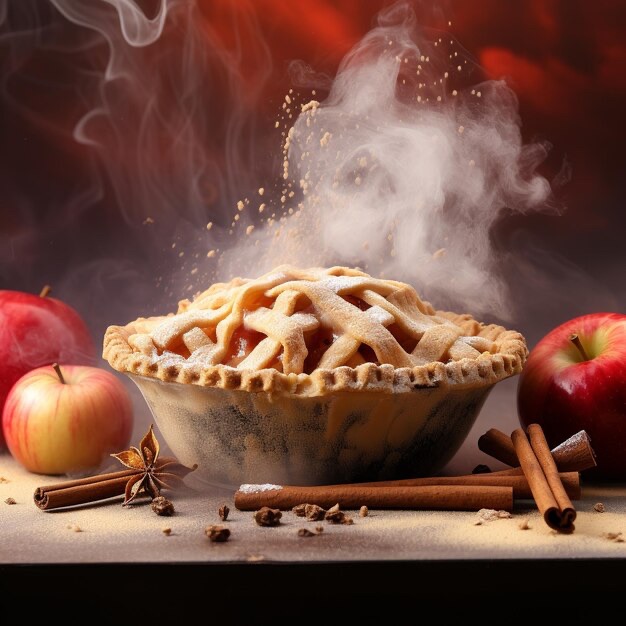
One surviving American apple-pie recipe from 1796, published by Amelia Simmons in American Cookery, calls for apples, sugar, lemon peel, cinnamon, mace and rose water baked in pastry. (Pilgrim Hall Museum)
That’s something I love about old recipes.
They remind us that our ancestors were not necessarily cooking completely different foods.
They were often cooking the same foods we still love today—but with the ingredients, equipment and techniques available to them.
The basic idea remains remarkably familiar:
Apples.
Sugar.
Spice.
Pastry.
Heat.
Time.
And somehow, those simple ingredients become something much greater than the sum of their parts.
🍂 Why Do Fall Flavors Feel So Comforting?
There is something fascinating about the way certain flavors become attached to memories.
Maybe it was your grandmother’s kitchen.
Maybe it was coming home from school to the smell of something baking.
Maybe it was a Thanksgiving table.
Maybe it was a Saturday morning when someone was making cinnamon rolls.
Maybe it was apple pie cooling on the counter while everyone was told:
“Don’t touch that until it cools.”
And, of course, somebody touched it anyway.
Food becomes part of our personal history.
That’s why recreating an old recipe can feel strangely emotional.
You’re not simply recreating a flavor.
You’re recreating a moment.
🧈 The Magic Combination: Apples, Butter & Brown Sugar
There is a reason these ingredients appear together again and again in fall baking.
Apples bring acidity, sweetness and moisture.
Brown sugar brings deep caramel-like sweetness.
Butter brings richness.
Cinnamon brings warmth.
And when they’re exposed to heat, something wonderful happens.
The sugars caramelize.
The apples soften.
The butter melts into the filling.
The spices bloom.
The kitchen begins to smell like autumn.
And suddenly everyone who walks through the door wants to know:
“What are you making?”
That’s the kind of cooking we love at Not Your Grams Kitchen.
The kind that makes people stop in the doorway.
The kind that makes someone ask for “just one little piece.”
And then come back five minutes later for another.
🌰 And Don’t Forget the Pecans
Here in the South, fall baking has another important player:
the pecan.
Pecans bring crunch, richness and a subtle buttery flavor that pairs beautifully with apples.
Add them to a crumble topping.
Fold them into cookies.
Scatter them across a cake.
Mix them into apple butter bars.
Or toast them and eat half of them before they ever make it into the recipe.
We won’t judge.
After all, sometimes the cook needs quality control.
☕ Why Fall Baking Belongs Beside a Cup of Coffee
There is also something wonderfully old-fashioned about the relationship between baked goods and coffee.
A warm slice of apple cake.
A cinnamon biscuit.
A piece of apple butter bread.
A buttery crumble bar.
A cup of coffee beside it.
It doesn’t need to be fancy.
In fact, the simplicity is part of the charm.
Food doesn’t always need to be complicated to be memorable.
Sometimes the best recipes are the ones that make us slow down.
🍎 Bringing an Old Tradition Into a New Kitchen
This is where Not Your Grams Kitchen comes in.
We’re not interested in simply copying the past.
We’re interested in taking inspiration from it.
The old recipes give us the foundation.
Modern kitchens give us new possibilities.
And our imagination gets to fill in the space between the two.
That’s how traditions survive.
They change.
They adapt.
They get passed from one generation to another.
And eventually someone adds their own little twist.
Maybe that’s how your family’s favorite recipe came to exist in the first place.
🍎 Not Your Grams Kitchen’s Salted Caramel Apple Butter Crumble Bars
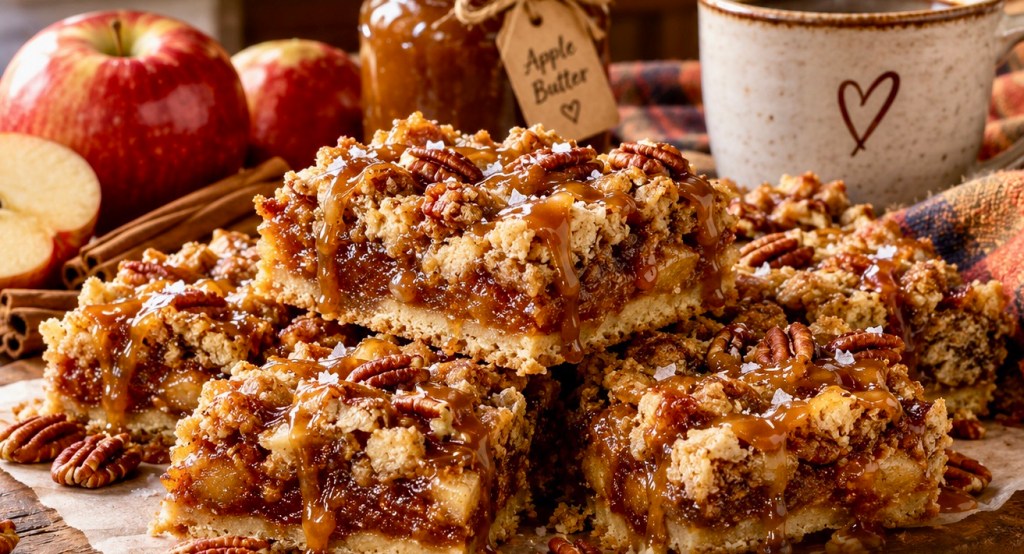
And because we couldn’t talk about fall baking without actually baking something, here’s our first official taste of autumn.
These bars combine everything we love about the season:
Apple butter.
Cinnamon.
Brown sugar.
Toasted pecans.
Buttery crumble.
And salted caramel.
The result is a dessert that tastes like an apple pie, crumble and caramel apple decided to get together and make something entirely new.
Ingredients
For the Crust
- 1½ cups all-purpose flour
- ½ cup packed light brown sugar
- ½ teaspoon cinnamon
- ¼ teaspoon salt
- ¾ cup unsalted butter, melted
- 1 teaspoon vanilla extract
For the Apple Butter Filling
- 1½ cups apple butter
- ½ cup finely diced peeled apple
- 2 tablespoons brown sugar
- 1 teaspoon cinnamon
- ¼ teaspoon nutmeg
- 1 tablespoon all-purpose flour
- 1 teaspoon lemon juice
- 1 teaspoon vanilla extract
For the Crumble Topping
- ¾ cup all-purpose flour
- ½ cup old-fashioned oats
- ½ cup packed brown sugar
- ½ teaspoon cinnamon
- ¼ teaspoon salt
- ½ cup cold unsalted butter, cubed
- ¾ cup chopped toasted pecans
For the Salted Caramel
- ½ cup packed brown sugar
- ¼ cup heavy cream
- 2 tablespoons unsalted butter
- ½ teaspoon vanilla extract
- ¼ teaspoon flaky sea salt
Instructions
1. Prepare the Pan
Preheat your oven to 350°F.
Line an 8×8-inch baking pan with parchment paper, leaving enough overhang to lift the finished bars from the pan.
Lightly grease the parchment.
2. Make the Crust
In a bowl, combine the flour, brown sugar, cinnamon and salt.
Stir in the melted butter and vanilla until a soft, crumbly dough forms.
Press approximately two-thirds of the mixture firmly into the bottom of the prepared pan.
Bake for 12–15 minutes, just until the edges begin to turn lightly golden.
Remove from the oven.
3. Make the Apple Butter Filling
In another bowl, combine the apple butter, diced apple, brown sugar, cinnamon, nutmeg, flour, lemon juice and vanilla.
Spread the mixture evenly over the warm crust.
4. Make the Crumble
Combine the flour, oats, brown sugar, cinnamon and salt.
Cut in the cold butter using your fingers or a pastry cutter until coarse crumbs form.
Fold in the toasted pecans.
Sprinkle the crumble evenly over the apple-butter layer.
5. Bake
Return the pan to the oven.
Bake for approximately 30–35 minutes, or until the crumble is golden and the filling is bubbling around the edges.
Allow the bars to cool completely before cutting.
This is important.
We know.
Waiting is hard.
But your future self will thank you.
6. Make the Salted Caramel
Place the brown sugar, heavy cream and butter in a small saucepan over medium-low heat.
Stir until the butter melts and the mixture becomes smooth.
Allow it to gently simmer for approximately 2–3 minutes, stirring frequently.
Remove from the heat.
Stir in the vanilla and sea salt.
Let cool slightly.
7. Finish the Bars
Lift the cooled bars from the pan.
Drizzle generously with the salted caramel.
For an extra autumn touch, sprinkle a few additional toasted pecans over the top.
Cut into squares.
Serve with coffee.
Or tea.
Or vanilla ice cream.
Or absolutely nothing at all.
They’re perfectly capable of standing on their own.
❤️ Fall Isn’t Just a Season
Fall has a funny way of reminding us that food is more than food.
It’s memory.
It’s tradition.
It’s family.
It’s a warm kitchen when the world outside gets colder.
It’s the smell that makes someone walk into the room and ask what you’re making.
It’s the recipe written on an old index card.
It’s flour on the counter.
It’s somebody sneaking a bite before dinner.
It’s the person who taught you how to cook.
And sometimes, it’s taking an old tradition and making it your own.
That’s what we hope to do here at Not Your Grams Kitchen.
We’re not trying to replace the recipes and traditions that came before us.
We’re adding another chapter.
Because every kitchen has a history.
Every recipe has a story.
And every generation gets to add something of its own.
So this fall, bake something.
Make something.
Share something.
Call someone you haven’t talked to in a while.
Put the coffee on.
Let the kitchen get a little messy.
And when that unmistakable smell of apples, cinnamon and caramel starts filling the house, stop for just a moment.
Take it in.
Because someday, that smell might be somebody else’s memory.
From our kitchen to yours, welcome to fall.
— Not Your Grams Kitchen

