

The frittata is one of those beautifully simple dishes that proves good cooking doesn’t have to be complicated. Rich, versatile, and endlessly adaptable, the frittata has earned its place in kitchens around the world—from rustic Italian homes to modern cafés.
A Brief History of the Frittata
The word frittata comes from the Italian verb friggere, meaning “to fry.” Historically, the term was used broadly in Italy to describe any egg-based dish cooked in a pan—similar to how we might loosely use “omelet” today.
However, the modern frittata evolved as a distinct dish during the 19th century. Unlike the French omelet, which is delicate and folded, the frittata is heartier and cooked more slowly. It typically incorporates ingredients like vegetables, cheeses, meats, and herbs directly into the eggs.
Traditionally, frittatas were a practical, economical meal—often made to use up leftovers. This “waste-not” philosophy made it especially popular among rural and working-class families. Over time, its flexibility and satisfying nature helped it spread beyond Italy, becoming a brunch staple and café favorite worldwide.
Today, the frittata sits somewhere between a crustless quiche and an open-faced omelet, often finished in the oven and served warm or at room temperature.
What Makes a Great Frittata?
A proper frittata is:
- Light but structured
- Rich without being heavy
- Packed with balanced flavors
- Cooked gently for a tender texture
The key is low, even heat and not overmixing the eggs.
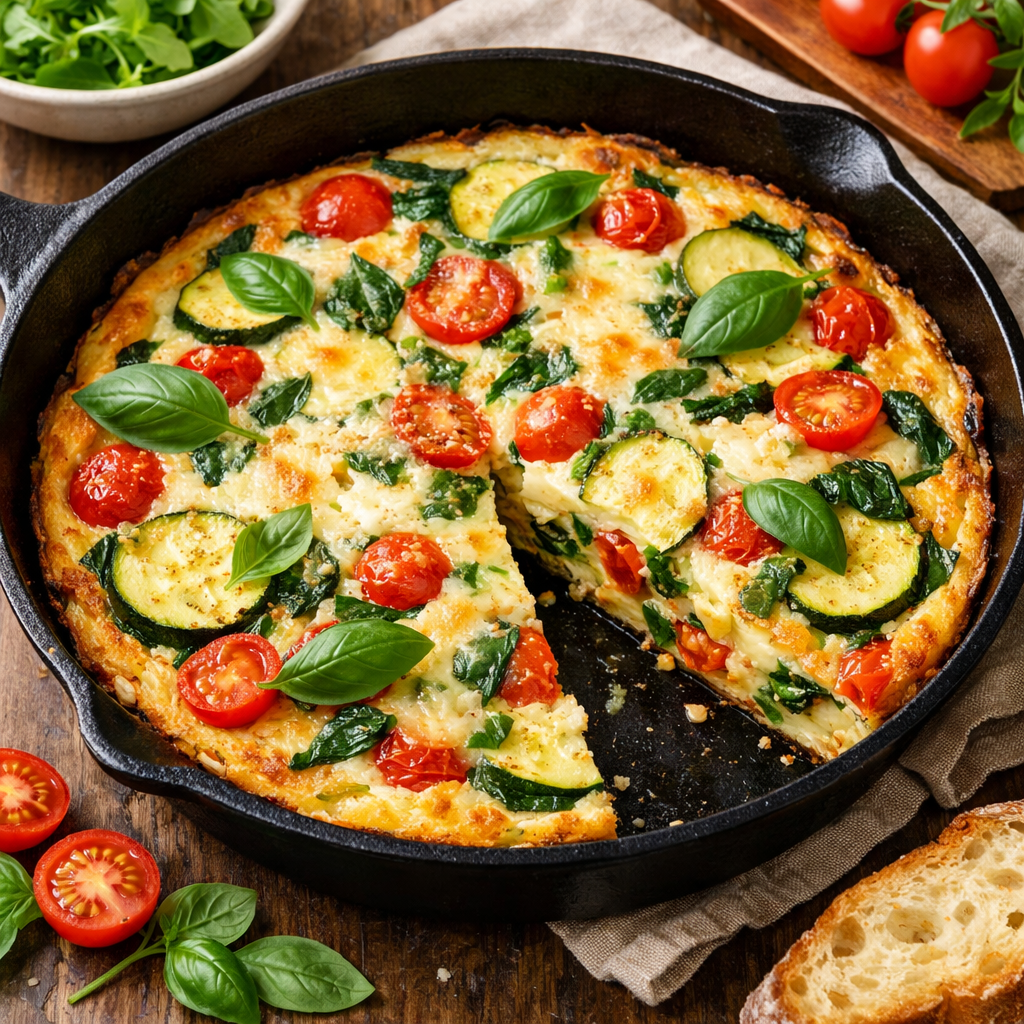
Classic Garden Vegetable Frittata
Bright, fresh, and perfect for breakfast or lunch
Ingredients
- 8 large eggs
- ¼ cup whole milk or cream
- 1 cup zucchini, sliced
- 1 cup cherry tomatoes, halved
- ½ cup red onion, thinly sliced
- 1 cup fresh spinach
- ½ cup shredded mozzarella or fontina
- 2 tbsp olive oil
- Salt and pepper to taste
- Fresh basil (optional)
Instructions
- Preheat oven to 375°F.
- Whisk eggs, milk, salt, and pepper until smooth.
- Heat olive oil in an oven-safe skillet over medium heat.
- Sauté onion and zucchini until softened.
- Add tomatoes and spinach; cook until spinach wilts.
- Pour egg mixture over vegetables. Sprinkle cheese evenly.
- Cook on stovetop for 2–3 minutes without stirring.
- Transfer to oven and bake 10–12 minutes until set.
- Rest for 5 minutes before slicing.
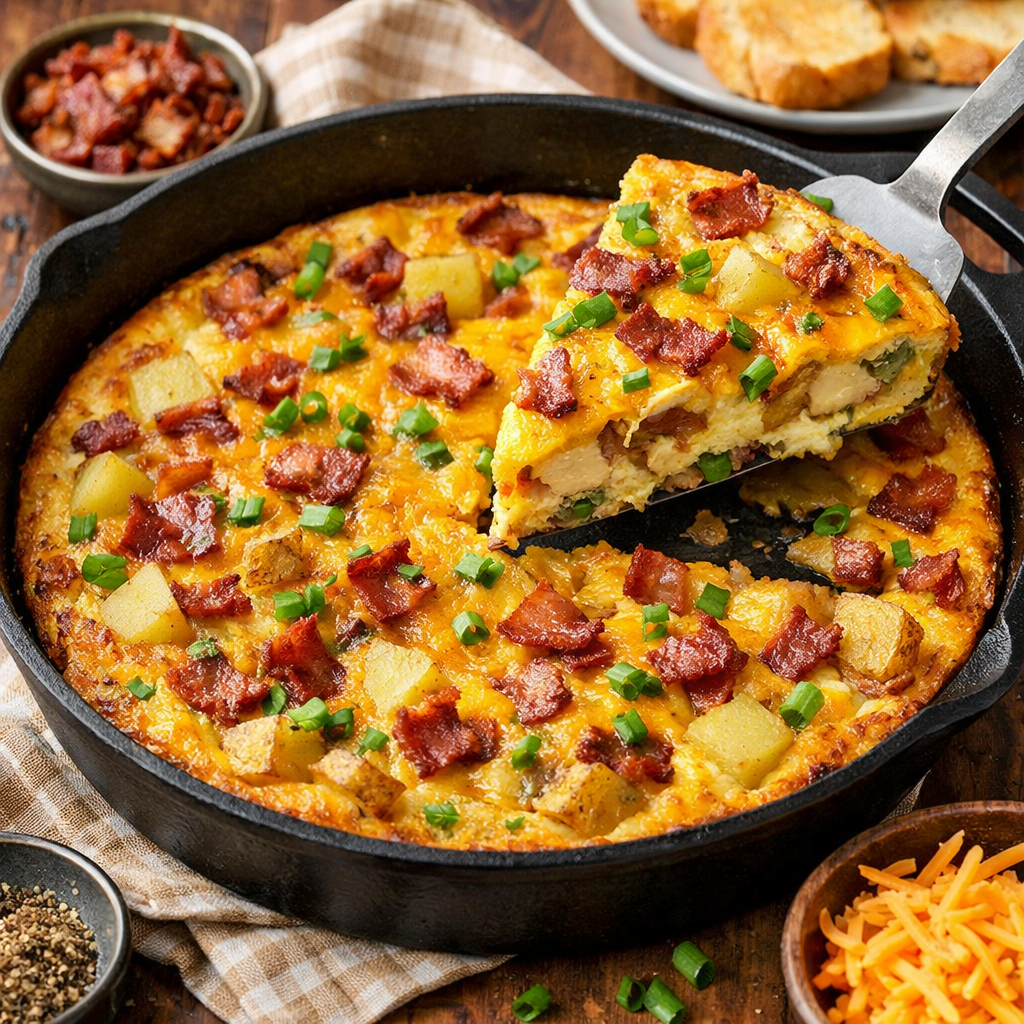
Bacon, Cheddar & Potato Frittata
Hearty and satisfying—perfect for brunch service
Ingredients
- 8 large eggs
- ¼ cup heavy cream
- 1 cup cooked potatoes, diced
- 6 slices bacon, cooked and crumbled
- ¾ cup sharp cheddar cheese
- ¼ cup green onions
- 1 tbsp butter or bacon fat
- Salt and pepper
Instructions
- Preheat oven to 375°F.
- Whisk eggs, cream, salt, and pepper.
- Heat butter or bacon fat in skillet.
- Add potatoes and cook until lightly crisped.
- Stir in bacon and green onions.
- Pour in egg mixture and top with cheddar.
- Cook 2–3 minutes on stovetop.
- Transfer to oven and bake 12–15 minutes.
- Let rest slightly before serving.
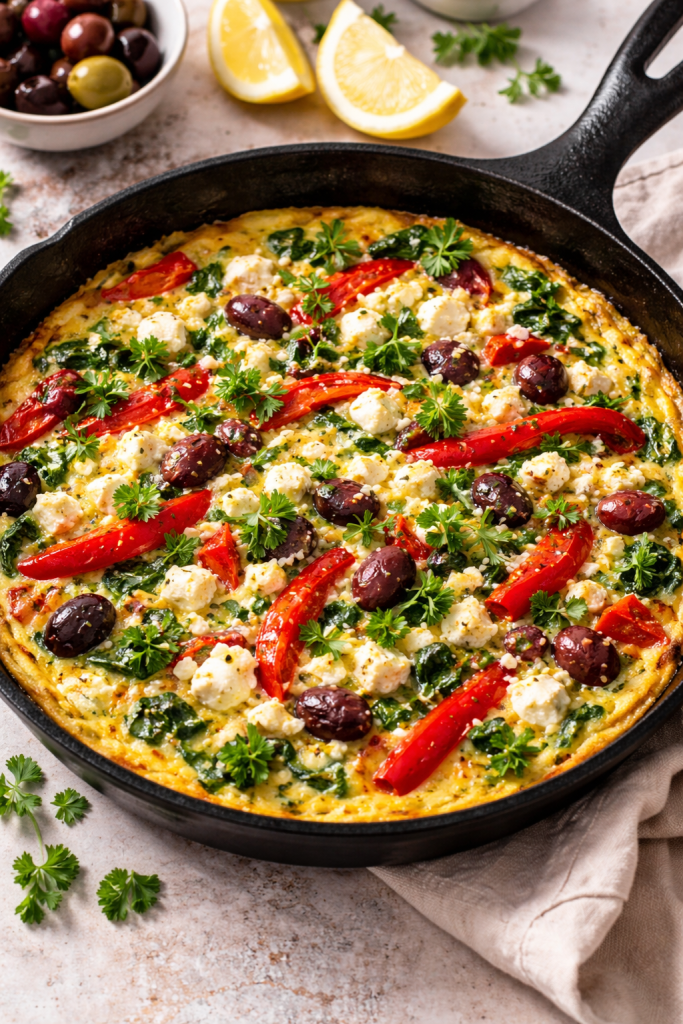
Mediterranean Frittata with Feta & Herbs
Bold flavors with a café-style twist
Ingredients
- 8 large eggs
- ¼ cup milk
- ½ cup crumbled feta cheese
- 1 cup roasted red peppers, sliced
- ½ cup kalamata olives, chopped
- 1 cup fresh spinach or arugula
- 2 tbsp olive oil
- 1 tsp dried oregano
- Fresh parsley for garnish
- Salt and pepper
Instructions
- Preheat oven to 375°F.
- Whisk eggs, milk, oregano, salt, and pepper.
- Heat olive oil in skillet over medium heat.
- Add peppers and greens; cook until softened.
- Stir in olives.
- Pour egg mixture into pan.
- Sprinkle feta evenly over top.
- Cook briefly on stovetop, then transfer to oven.
- Bake 10–12 minutes until just set.
- Garnish with parsley and serve.
Final Thoughts
The beauty of the frittata lies in its adaptability. Whether you’re using seasonal vegetables, leftover meats, or artisan cheeses, it can easily be tailored to fit any menu or mood.
 Not Your Grams Kitchen