

Wartime cooking and baking represent one of the most creative and resilient chapters in culinary history. Faced with rationing, shortages, and uncertainty, home cooks developed innovative techniques to stretch limited ingredients, feed their families, and support the war effort. These resourceful methods not only sustained millions during global conflict but also shaped modern cooking habits that continue today.
The Origins of Wartime Cooking
Wartime cooking became especially prominent during World War I and World War II, when governments redirected food supplies to military forces. Civilians were encouraged—or required—to conserve key ingredients like sugar, butter, eggs, meat, and wheat.
In the United States, the United States Food Administration, led by Herbert Hoover, promoted voluntary rationing and conservation. Citizens observed “Meatless Mondays” and “Wheatless Wednesdays,” reducing their consumption so soldiers could be adequately supplied.
Meanwhile, in the United Kingdom, the Ministry of Food enforced strict rationing during World War II. Every citizen received ration books limiting how much sugar, butter, cheese, meat, and eggs they could purchase each week.
Why Rationing Was Necessary
Rationing served several crucial purposes:
Ensuring fair distribution of scarce food Preventing hoarding and panic buying Supporting military supply chains Managing disrupted farming and transportation Maintaining civilian morale and health
Shipping lanes were dangerous due to submarine attacks, farms lost workers to military service, and imported goods became difficult to obtain. Rationing ensured everyone received at least minimal nutrition.
Common Ingredient Shortages
Many familiar baking ingredients were scarce or unavailable, forcing cooks to adapt recipes.
Frequently rationed ingredients included:
Sugar Butter and fats Eggs Milk White flour Meat Chocolate
Because of these shortages, traditional cakes, cookies, and breads had to be reinvented.
Creative Substitutions and Innovations
Home cooks developed ingenious substitutions to replicate texture, flavor, and nutrition.
Fat Substitutes
Butter and shortening were often replaced with:
Bacon grease Lard Drippings Applesauce Mashed beans or vegetables
These alternatives provided moisture and richness.
Egg Substitutes
Egg shortages led to creative replacements such as:
Applesauce Mashed bananas Vinegar and baking soda combinations Cornstarch and water mixtures
These substitutes helped cakes rise and maintain structure.
Sugar Substitutes
Sugar was extremely limited, so people used:
Honey Molasses Corn syrup Raisins or dates for natural sweetness
Carrots were especially popular because they added sweetness, moisture, and nutrients.
Flour Alternatives
White flour was often replaced or extended with:
Oatmeal Barley flour Potato flour Ground legumes
These substitutions improved nutrition while conserving wheat.
Iconic Wartime Recipes
Several recipes became symbols of wartime resilience.
1. Depression Cake (Wacky Cake)
This chocolate cake used no eggs, milk, or butter. Instead, it relied on vinegar and baking soda for lift and oil for moisture.
It remains popular today for its simplicity and rich flavor.
2. Carrot Cake
Carrots provided sweetness when sugar was scarce. Wartime carrot cake was often less sweet than modern versions but incredibly moist.
This recipe helped popularize carrot cake worldwide.
3. Mock Apple Pie
Made with crackers instead of apples, this pie mimicked the flavor and texture of apple pie using cinnamon, sugar, and lemon juice.
4. Potato Pastry and Bread
Potatoes were used to extend flour supplies, creating softer bread and more filling pastries.
Victory Gardens and Home Food Production
To supplement rationed food, governments encouraged citizens to grow their own food in “Victory Gardens.”
These gardens produced:
Vegetables Fruits Herbs
By 1944, nearly 40% of produce consumed in the United States came from home gardens.
This reduced pressure on commercial farms and ensured fresh food for families.
Government Guidance and Educational Campaigns
Governments actively educated citizens through:
Posters Radio programs Recipe pamphlets Cooking demonstrations
They promoted efficient cooking methods and minimizing waste.
Popular slogans included:
“Use it up, wear it out, make it do, or do without.” “Waste nothing.”
Cookbooks featured recipes designed specifically for rationing conditions.
Psychological and Social Impact
Cooking became more than survival—it became an act of patriotism.
Baking and cooking boosted morale by:
Providing comfort during stressful times Maintaining family traditions Giving civilians a sense of contribution to the war effort
Sharing recipes and techniques strengthened community bonds.
Long-Term Effects on Modern Cooking
Many wartime innovations still influence cooking today:
1. Ingredient Substitution Awareness
Modern bakers now understand how to replace eggs, dairy, and fats due to wartime experimentation.
2. Waste Reduction
The wartime “waste nothing” mindset helped inspire modern sustainability practices.
3. Budget-Friendly Cooking
Stretching ingredients remains valuable during economic hardship.
4. Popular Recipes That Originated in Wartime
Many beloved recipes came from wartime necessity, including:
Carrot cake Depression cake Oat-based breads Eggless cookies
Lessons in Resilience and Creativity
Wartime cooking demonstrated humanity’s ability to adapt under extreme conditions. Limited ingredients did not prevent families from enjoying nourishing and comforting meals.
Instead, shortages sparked innovation.
Cooks learned to:
Improvise Substitute creatively Reduce waste Maximize nutrition Maintain morale through food
These lessons remain relevant today.
Wartime cooking and baking represent a powerful example of resilience, creativity, and resourcefulness. Faced with severe shortages, ordinary people reinvented recipes, discovered new ingredients, and developed techniques still used today.
What began as necessity became lasting culinary wisdom.
These practices remind us that even in the most difficult times, ingenuity and determination can transform scarcity into nourishment, comfort, and hope.
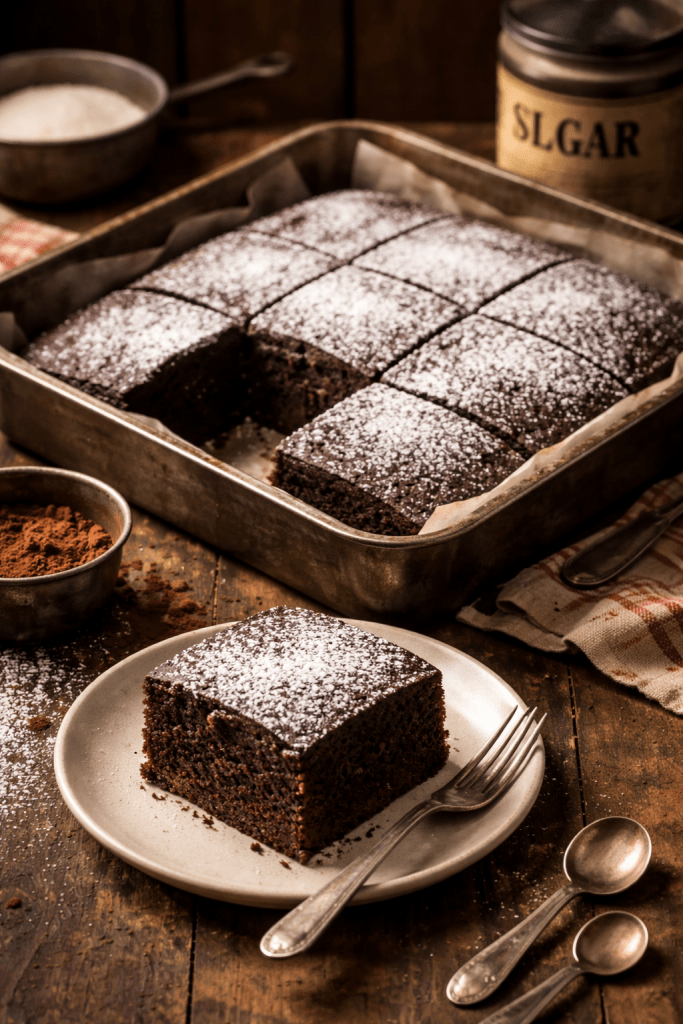
1. Wartime Chocolate Depression Cake (No Eggs, Milk, or Butter)
This cake became popular during WWII because it required no rationed dairy or eggs, yet still tasted rich and chocolatey.
Ingredients
1 ½ cups all-purpose flour
1 cup granulated sugar
¼ cup unsweetened cocoa powder
1 teaspoon baking soda
½ teaspoon salt
1 teaspoon vanilla extract
1 tablespoon white vinegar
⅓ cup vegetable oil
1 cup water
Instructions
Preheat oven to 350°F (175°C). Grease an 8-inch square pan. In a large bowl, mix flour, sugar, cocoa powder, baking soda, and salt. Add vanilla, vinegar, oil, and water. Stir until smooth and fully combined. Pour into prepared pan. Bake for 30–35 minutes, or until a toothpick comes out clean. Cool before serving.
Why it worked
The vinegar reacts with baking soda to create lift, replacing eggs.
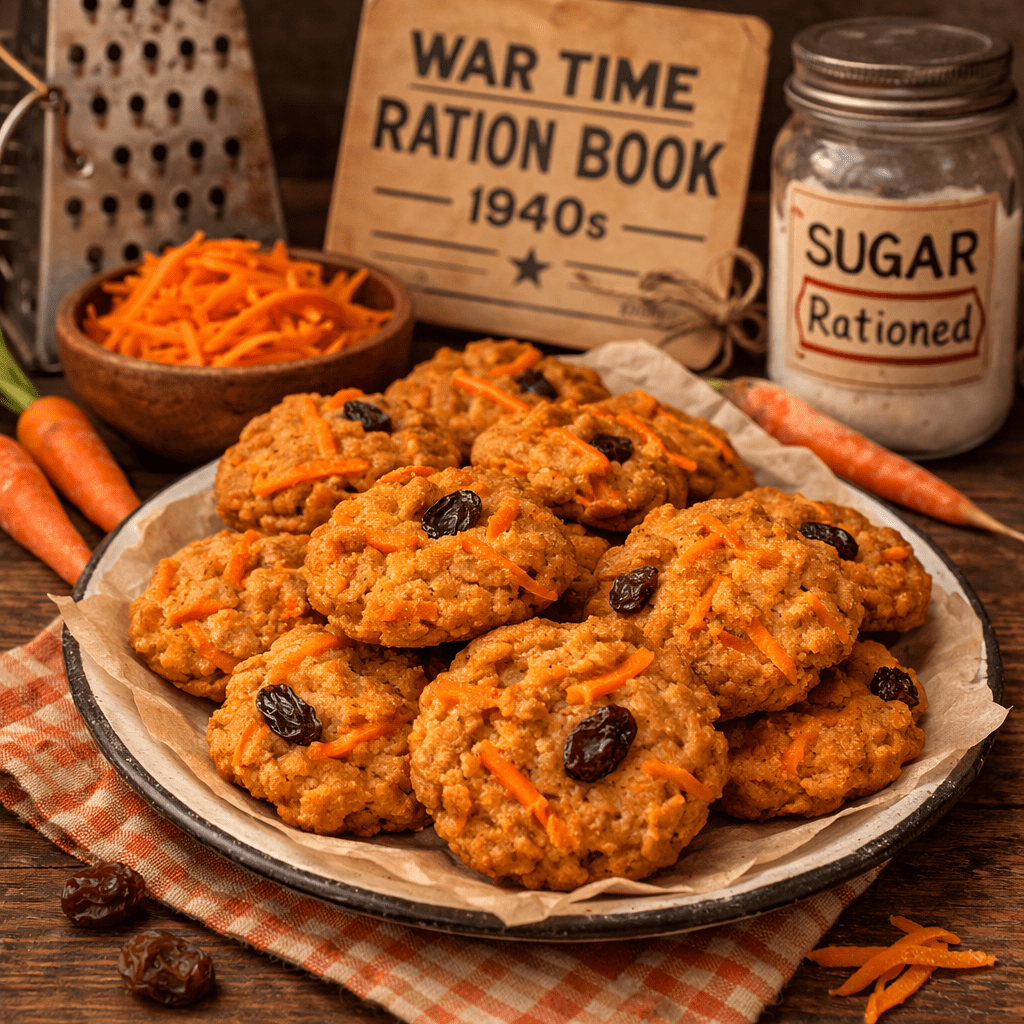
2. Wartime Carrot Cookies (Eggless and Butter-Free)
Carrots provided natural sweetness when sugar was limited.
Ingredients
1 cup grated carrots
½ cup sugar
½ cup vegetable oil or melted shortening
1 teaspoon vanilla extract
1 ½ cups flour
1 teaspoon baking powder
½ teaspoon baking soda
½ teaspoon cinnamon
¼ teaspoon salt
Optional: ½ cup raisins
Instructions
Preheat oven to 350°F (175°C). In a bowl, mix carrots, sugar, oil, and vanilla. In another bowl, combine flour, baking powder, baking soda, cinnamon, and salt. Add dry ingredients to wet mixture and stir. Drop spoonfuls onto baking sheet. Bake 12–15 minutes. Cool before eating.
Why it worked
Carrots added moisture and sweetness, reducing sugar needs.
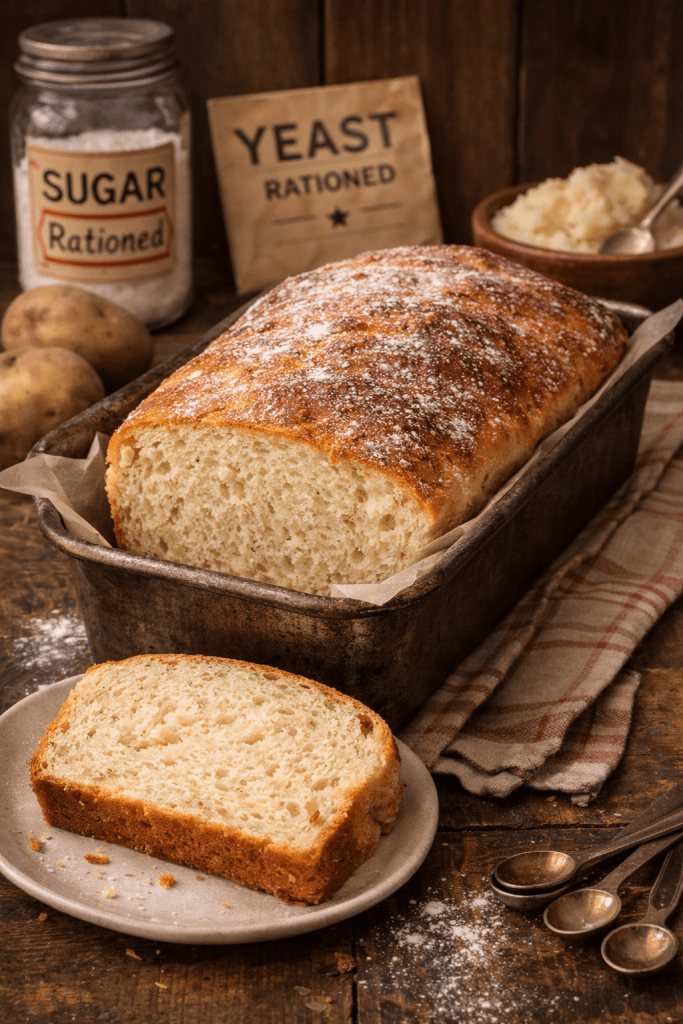
3. Wartime Potato Bread
Potatoes helped stretch limited flour supplies and made bread softer.
Ingredients
1 cup mashed potatoes (plain, unseasoned)
2 cups flour
1 packet (2 ¼ teaspoons) yeast
1 tablespoon sugar
1 teaspoon salt
¾ cup warm water
Instructions
Dissolve yeast and sugar in warm water. Let sit 5–10 minutes. Add mashed potatoes and salt. Gradually mix in flour to form dough. Knead 5–8 minutes. Place in greased bowl, cover, and let rise 1 hour. Shape into loaf and place in greased pan. Let rise 30 minutes. Bake at 375°F (190°C) for 35–40 minutes.
Why it worked
Potatoes extended flour and retained moisture, keeping bread fresh longer.
 Not Your Grams Kitchen