

Few baked goods stir up as much comfort and nostalgia as the cinnamon roll. Its warm layers of dough, swirls of spiced sugar, and often a drizzle of icing have made it a beloved treat across the globe. But this pastry’s story is more than just sweetness—it’s one of cultural exchange, evolving tastes, and centuries-old baking traditions.
Ancient Roots of Cinnamon
The story of cinnamon rolls begins not with bread, but with spice. Cinnamon has been prized for thousands of years, dating back to ancient Egypt where it was valued for embalming, medicine, and flavoring food. By the Middle Ages, cinnamon was one of the most sought-after spices in Europe, carried along the trade routes from Sri Lanka, India, and the Middle East.
Because it was rare and expensive, cinnamon quickly became a symbol of luxury. Wealthy households and royal kitchens across Europe used it in breads, pastries, and meat dishes. These early uses of cinnamon paved the way for its starring role in the pastry we know today.
Birth of the Cinnamon Roll in Europe
The modern cinnamon roll is believed to have roots in Northern Europe, particularly Sweden and Germany. In Sweden, the kanelbulle—literally “cinnamon bun”—first appeared in the early 20th century. It featured a lightly sweetened yeast dough spiced with cinnamon, sugar, and cardamom. Swedish bakers often topped the buns with pearl sugar instead of icing, creating a treat that was both aromatic and modestly sweet.
Germany also embraced the cinnamon-laced pastry, with variations like the schnecken (“snail”), named for its spiral shape. German immigrants later brought their baking traditions to the United States, where recipes adapted to American tastes.
Cinnamon Rolls in America
In the U.S., cinnamon rolls became bigger, sweeter, and more indulgent. By the mid-20th century, they were a staple of Midwestern kitchens, church gatherings, and community bake sales. The addition of cream cheese frosting and butter-rich dough made them heavier and richer than their European cousins.
Cinnamon rolls also found their place in American diner culture, often served warm alongside coffee as a breakfast or brunch item. In some regions, like the Midwest, cinnamon rolls are famously paired with chili—a combination that may surprise outsiders but has deep local roots.
The commercial rise of cinnamon rolls exploded in the 1980s and 1990s with the expansion of Cinnabon, founded in Seattle in 1985. Their oversized rolls, dripping with cream cheese frosting, became an icon of shopping malls across the country and helped cement cinnamon rolls as a quintessential comfort food.
A Global Symbol of Comfort
Today, cinnamon rolls are enjoyed worldwide, with each culture putting its own spin on the pastry. In Sweden, Kanelbullens dag (Cinnamon Bun Day) is celebrated every October 4th, a testament to the roll’s cultural importance. In the United States, they continue to be tied to cozy mornings, family gatherings, and indulgent treats.
From artisanal bakeries experimenting with fillings like apple, pecan, or pumpkin spice, to home kitchens where recipes are passed down through generations, cinnamon rolls embody both tradition and creativity.
More Than Just a Pastry
The enduring appeal of cinnamon rolls lies not only in their flavor but in their symbolism. They represent warmth, hospitality, and a little bit of luxury in everyday life. Whether enjoyed fresh from the oven on a crisp morning, shared with friends over coffee, or picked up as a nostalgic treat at a local bakery, cinnamon rolls remain one of the sweetest ways to connect with history and with each other.

Here are three different versions of cinnamon rolls, each with its own twist on the classic recipe:
Classic Cinnamon Rolls with Cream Cheese Frosting
The traditional American version—soft, buttery dough rolled with cinnamon-sugar filling and topped with rich cream cheese icing.
Ingredients (for dough):
4 cups all-purpose flour
1 packet active dry yeast
1 cup warm milk
1/3 cup butter, melted
1/3 cup sugar
2 eggs
1 tsp salt
Filling:
1/2 cup butter, softened
1 cup brown sugar
2 tbsp cinnamon
Frosting:
4 oz cream cheese
1/4 cup butter, softened
1 1/2 cups powdered sugar
1 tsp vanilla extract
Directions:
Mix yeast with warm milk and sugar; let foam. Add butter, eggs, salt, and flour; knead into soft dough. Let rise until doubled. Roll dough into rectangle. Spread with butter, sprinkle cinnamon-sugar, roll up, and cut into spirals. Place in pan, let rise again, bake at 350°F (175°C) for 25–30 minutes. Frost while warm.
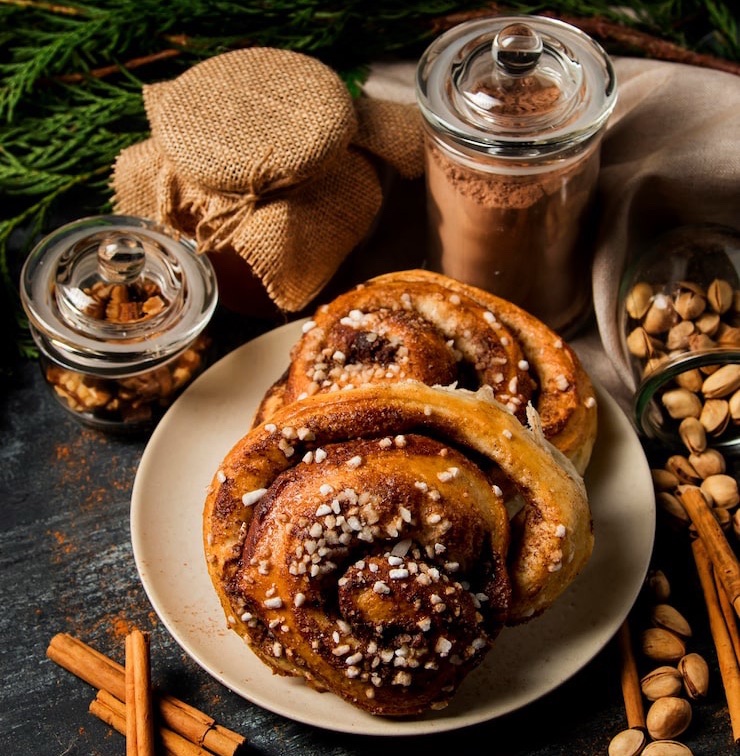
Swedish Kanelbullar (Cinnamon Buns with Cardamom)
A less sweet, spiced version from Sweden, usually topped with pearl sugar instead of frosting.
Ingredients (for dough):
4 cups all-purpose flour
1 packet active dry yeast
1 1/4 cups warm milk
1/3 cup butter, melted
1/3 cup sugar
1 tsp ground cardamom
1/2 tsp salt
Filling:
1/4 cup butter, softened
1/2 cup sugar
2 tbsp cinnamon
Topping:
1 egg, beaten
Pearl sugar
Directions:
Make dough with yeast, milk, butter, sugar, flour, cardamom, and salt. Knead until smooth. Let rise, then roll into rectangle. Spread filling evenly. Roll up, cut, and twist buns into a knot shape. Brush with beaten egg, sprinkle pearl sugar. Bake at 400°F (200°C) for 10–12 minutes until golden.

Sticky Pecan Caramel Cinnamon Rolls
An indulgent Southern-style version baked with caramel and pecans at the bottom of the pan.
Ingredients (for dough):
Use same dough as Classic Rolls
Caramel Pecan Base:
1/2 cup butter
3/4 cup brown sugar
1/4 cup honey or corn syrup
1 cup chopped pecans
Filling:
Same as Classic Rolls
Directions:
Prepare caramel base by melting butter, sugar, and honey. Pour into bottom of greased baking pan, sprinkle pecans on top. Roll dough, spread filling, cut rolls, and place over caramel. Let rise, then bake at 350°F (175°C) for 25–30 minutes. Invert pan after baking so caramel and pecans coat the rolls.

Here’s a gluten-free cinnamon roll recipe that stays soft, fluffy, and indulgent without the wheat flour.
Gluten-Free Cinnamon Rolls
These rolls are tender, sweet, and every bit as satisfying as traditional ones. The key is using a good gluten-free flour blend and a touch of xanthan gum for elasticity.
Ingredients
For the Dough:
2 1/2 cups gluten-free all-purpose flour blend (with xanthan gum included)
1 packet (2 1/4 tsp) instant yeast
1 cup warm milk (dairy or plant-based)
1/4 cup sugar
1/4 cup butter (or coconut oil), melted
2 eggs, room temperature
1 tsp vanilla extract
1/2 tsp salt
For the Filling:
1/3 cup butter, softened
3/4 cup brown sugar
2 tbsp cinnamon
For the Frosting:
4 oz cream cheese (or dairy-free alternative)
2 tbsp butter, softened
1 cup powdered sugar
1/2 tsp vanilla extract
1–2 tbsp milk (to thin if needed)
Directions
Activate Yeast: In a bowl, combine warm milk (about 110°F), yeast, and sugar. Let it sit 5–10 minutes until foamy.
Make Dough: Add melted butter, eggs, vanilla, and salt. Stir in the gluten-free flour blend gradually. The dough will be softer and stickier than wheat dough—more like thick batter.
First Rise: Cover bowl and let dough rise in a warm spot for 45–60 minutes, until puffy.
Shape Rolls: Lay out parchment paper, dust with a little gluten-free flour, and roll dough into a rectangle (about ¼ inch thick). Spread softened butter on top, then sprinkle cinnamon-sugar filling.
Roll and Slice: Use the parchment to help roll it up tightly into a log. Slice into 8–10 rolls with a sharp knife or dental floss.
Second Rise: Place rolls in a greased 9×13 pan. Cover and let rise another 20–30 minutes.
Bake: Preheat oven to 350°F (175°C). Bake rolls 25–30 minutes, until golden and cooked through.
Frost: Whisk frosting ingredients together and spread on warm rolls.
✨ Tips for Success:
If your gluten-free flour blend doesn’t contain xanthan gum, add 1 tsp to the dough. Use parchment paper to help roll and transfer the dough—it’s softer than regular dough. For extra gooeyness, drizzle warm rolls with a little cream or milk right after baking before frosting.
 Not Your Grams Kitchen