

The Dutch baby pancake, with its billowing edges, custardy center, and irresistible versatility, has become a beloved brunch staple in kitchens and cafes across the United States. Despite its name, the Dutch baby is not Dutch in the European sense, nor is it traditionally a pancake in the American sense. Its unique origins, fascinating history, and culinary evolution tell a rich story of immigrant ingenuity, American innovation, and enduring appeal.
Origins: Not Dutch, but “Deutsch”
The name “Dutch baby” is believed to be a linguistic misinterpretation. The dish actually traces its roots to German immigrants who settled in the United States in the 18th and 19th centuries. These immigrants brought with them a dish known as Pfannkuchen—a baked pancake that was more eggy and puffy than the flat American version.
The term “Dutch” in “Dutch baby” is widely accepted to be a corruption of the word “Deutsch,” which means “German” in German. Over time, especially in regions like Pennsylvania, where “Pennsylvania Dutch” culture flourished, the term “Dutch” became commonly used in place of “Deutsch,” despite referring to German rather than Dutch culture.
Birth of the Modern Dutch Baby
The modern Dutch baby pancake as we know it today was popularized in the early 20th century by a family-run restaurant in Seattle, Washington called Manca’s Café. According to culinary lore, Victor Manca, the café’s owner, began serving the baked pancake sometime in the 1900s. It was his daughter who allegedly dubbed the smaller versions “Dutch babies,” a name that stuck.
Manca’s version was made in a cast-iron skillet and baked in the oven, resulting in a dramatic puffed edge and tender center. The Dutch baby was typically served with lemon juice, powdered sugar, and butter—though over time, countless sweet and savory variations have emerged.
How It’s Made: The Science Behind the Puff
Unlike traditional pancakes made on a griddle, a Dutch baby is made from a thin, egg-heavy batter poured into a preheated skillet and baked in a hot oven. The steam generated during baking causes the batter to puff dramatically, especially around the edges, creating its signature bowl-like shape.
The basic batter consists of:
Eggs Milk Flour A pinch of salt Often a bit of sugar and vanilla for flavor
The high proportion of eggs relative to flour and the hot pan are key to its dramatic rise, similar to a Yorkshire pudding or popover.
Cultural Resurgence and Modern Popularity
In the past few decades, the Dutch baby has experienced a cultural resurgence, thanks in part to the rise of brunch culture, social media food trends, and a renewed interest in heritage recipes. It offers a dramatic, Instagram-worthy presentation and is relatively simple to prepare, making it perfect for home cooks and professional chefs alike.
Today, you’ll find Dutch baby pancakes topped with everything from seasonal fruit, Nutella, and whipped cream to bacon, cheese, and sautéed vegetables. Its savory variations have particularly grown in popularity, adapting the dish for lunch or dinner settings.
A Pan-Baked Heritage Dish with Universal Appeal
The Dutch baby pancake is more than just a breakfast dish—it’s a culinary hybrid born of cultural blending and American ingenuity. Its journey from German Pfannkuchen to a Seattle café classic to an international brunch favorite is a testament to the evolving nature of food traditions. Whether you enjoy it sweet or savory, minimalist or decked out, the Dutch baby continues to charm with every dramatic puff and golden crust.
So next time you sit down to a slice of this airy, oven-baked delight, remember: it may be called a “Dutch” baby, but its roots run deep through German kitchens, American history, and the joy of shared meals.
Fun Fact: The original Manca’s Café closed in the mid-20th century, but copies of their original Dutch baby recipe still circulate among food historians and Seattle locals—a quiet legacy that continues to rise in kitchens everywhere.
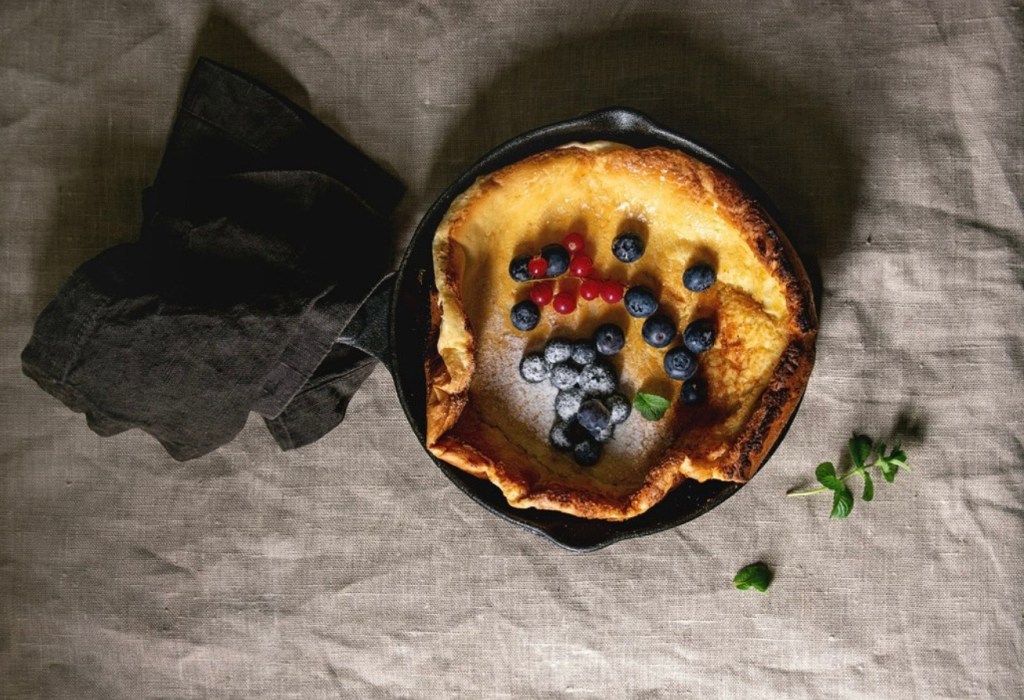
Here’s a classic Dutch Baby Pancake recipe—simple, delicious, and perfect for breakfast, brunch, or even dessert.
Classic Dutch Baby Pancake Recipe
Serves 2–4 | Prep time: 10 minutes | Cook time: 20 minutes
Ingredients:
3 large eggs
½ cup all-purpose flour
½ cup whole milk (room temperature preferred)
1 tablespoon granulated sugar (optional for sweet version)
1 teaspoon vanilla extract (optional)
¼ teaspoon salt
2 tablespoons unsalted butter (for the pan)
Optional toppings:
Powdered sugar
Fresh lemon juice
Fresh berries, maple syrup, or whipped cream
Instructions:
1. Preheat the oven and pan
Preheat your oven to 425°F (220°C).
Place a 10-inch cast-iron skillet or oven-safe pan in the oven while it preheats. This ensures a hot surface for the batter, which helps it puff.
2. Make the batter
In a blender or mixing bowl, combine:
Eggs Milk Flour Sugar (if using) Vanilla (if using) Salt
Blend or whisk until smooth (about 30 seconds in a blender or 1–2 minutes by hand). Let the batter rest for a few minutes if possible—this helps reduce bubbles and gives a better rise.
3. Add the butter to the pan
Carefully remove the hot skillet from the oven and add the 2 tablespoons of butter, swirling or brushing it around to coat the bottom and sides. The butter should sizzle but not brown too much.
4. Pour the batter into the pan
Immediately pour the batter into the center of the pan. Do not stir. Return the pan to the oven quickly.
5. Bake
Bake for 18–22 minutes, or until the Dutch baby is puffed, golden brown, and the edges are dramatically risen. Avoid opening the oven door during the first 15 minutes or the pancake may deflate.
6. Serve immediately
Once out of the oven, the pancake will begin to deflate slightly—this is normal. Sprinkle with powdered sugar, squeeze over lemon juice, or add your favorite toppings.
Tips:
For a savory version, skip the sugar and vanilla, and top with sautéed vegetables, cheese, or herbs. If you don’t have a blender, a whisk works just fine—just ensure the batter is lump-free. Room temperature eggs and milk yield a better rise but aren’t strictly necessary.
Enjoy your Dutch baby hot from the oven—crispy edges, custardy center, and endless topping possibilities!

Here’s a culinary-style recipe for a Dutch Baby Pancake, crafted for chefs and serious home cooks who appreciate precise technique and classic form.
Dutch Baby Pancake
Yield: 1 large pancake (serves 2–4 as a main or 4–6 as part of a brunch spread)
Ingredients:
3 large eggs, room temperature
125 mL (½ cup) whole milk, room temperature
60 g (½ cup) all-purpose flour, sifted
15 g (1 tbsp) granulated sugar (optional, for sweet version)
1 tsp vanilla extract (optional)
¼ tsp kosher salt
28 g (2 tbsp) unsalted butter
Optional Garnishes:
Powdered sugar
Fresh lemon wedges
Seasonal fruit
Whipped cream or crème fraîche
Maple syrup or fruit compote
Method:
1. Preheat Oven and Pan
Set the oven to 220°C (425°F) and place a 25 cm (10-inch) cast-iron skillet on the center rack. Allow the pan to heat for a minimum of 10 minutes—temperature consistency is essential for proper lift.
2. Prepare Batter
In a blender or using an immersion blender, combine:
Eggs Milk Flour Sugar (if using) Vanilla (if using) Salt
Blend for 30–45 seconds, until the mixture is fully homogenized and slightly frothy. Let the batter rest at room temperature for 10–15 minutes to relax the gluten and improve puff.
3. Heat Butter in Pan
Carefully remove the hot skillet from the oven. Add the butter and swirl to coat the base and sides thoroughly. Return the pan to the oven briefly if the butter does not melt fully, but avoid browning or burning.
4. Bake
Pour the batter directly into the center of the hot, buttered pan. Do not stir. Immediately return the pan to the oven and bake for 18–22 minutes, until the pancake is deeply golden and dramatically puffed at the edges. Do not open the oven door during the first 15 minutes of baking.
5. Serve Immediately
Transfer the skillet directly to the table or unmold onto a cutting board. Dust with powdered sugar, add a squeeze of fresh lemon juice, and serve with garnishes of choice.
Chef’s Notes:
A hot pan and room-temperature ingredients are critical for maximum rise. The Dutch baby is best served immediately—its dramatic rise will begin to settle within minutes of baking. For a savory variation, omit sugar and vanilla, and top with grated Gruyère, herbs, or sautéed mushrooms.
Wine Pairing (Optional):
Serve with a light, aromatic white wine such as a Riesling or Gewürztraminer for a brunch pairing, or a dry sparkling wine to complement the richness of the egg and butter.
This Dutch Baby is a study in simplicity and elegance—crispy, airy, and endlessly customizable.
 Not Your Grams Kitchen