

The doughnut, a sweet, deep-fried treat beloved around the world, boasts a rich and fascinating history that spans centuries and cultures. From ancient civilizations to contemporary coffee shops, the evolution of the doughnut reflects global culinary exchange, innovation, and indulgence.
Ancient and Medieval Origins
Though modern doughnuts are distinctly associated with American cuisine, the concept of fried dough is ancient. In early cultures such as Ancient Greece and Rome, cooks prepared small fried cakes sweetened with honey, resembling what we might call fritters today. Medieval Arab cultures developed similar treats, often spiced with cinnamon and cardamom and filled with nuts or fruits—elements that would later influence European baking traditions.
By the Middle Ages, fried dough had become a staple dessert across much of Europe. These early versions weren’t always ring-shaped; they often resembled small dough balls or twisted strips, sometimes filled with jam or cream.
Dutch Influence and the New World
The doughnut’s modern form began to take shape in the 17th century when Dutch settlers brought their version of fried dough, called olykoeks (oil cakes), to the Americas. These cakes were ball-shaped and fried in pork fat. A notable issue with early olykoeks was that the centers often remained uncooked. To solve this, cooks began stuffing them with fillings like nuts, fruits, or spices that didn’t require cooking—hence the term “dough-nut.”
It wasn’t until the 19th century that doughnuts started to take on their iconic ring shape. One of the most popular legends attributes the invention of the doughnut hole to a sailor named Hanson Gregory in 1847. He claimed to have punched a hole in the center of the dough to ensure it cooked evenly—a practical solution that stuck and became a defining characteristic.
Rise in Popularity and Mass Production
Doughnuts gained widespread popularity in the United States in the early 20th century. During World War I, female volunteers known as “Doughnut Girls” or “Doughnut Lassies” served homemade doughnuts to American soldiers in France. This gesture not only provided comfort but also established doughnuts as a symbol of home and patriotism.
In 1920, Adolph Levitt, a Russian-born immigrant in New York City, revolutionized doughnut-making by inventing the first automated doughnut machine. This enabled mass production, making doughnuts more accessible and consistent in quality. Levitt’s machine, showcased in his Harlem bakery, drew crowds and sparked nationwide interest.
The 1930s saw the founding of major doughnut chains such as Krispy Kreme (1937) and later Dunkin’ Donuts (1950), solidifying the doughnut’s place in American popular culture. These companies introduced standardized recipes, branding, and distribution networks that brought doughnuts to every corner of the U.S.
Cultural Symbolism and Global Variations
Beyond the U.S., the doughnut has numerous cultural counterparts. In Germany, Berliner are filled with jam; in Italy, zeppole are often enjoyed during festivals; in Israel, sufganiyot are central to Hanukkah celebrations. These variations highlight the universal appeal of fried, sweet dough, and each culture adapts the basic concept to its own tastes and traditions.
In the U.S., doughnuts evolved into a cultural icon. From being a cop cliché in films to becoming a canvas for gourmet innovation, they are simultaneously nostalgic and trendy. With artisan bakeries now offering flavors like matcha, lavender, bacon-maple, and crème brûlée, the doughnut continues to reinvent itself.
Doughnuts in the 21st Century
Today, doughnuts are more than just a breakfast treat. They’ve become social media sensations, luxury desserts, and even wedding cake alternatives. Pop-up shops, food trucks, and international franchises continue to expand the doughnut’s reach. The annual celebration of National Doughnut Day in the U.S., observed on the first Friday of June, commemorates the Salvation Army’s World War I efforts and remains a popular marketing event.
From humble fried dough balls in ancient times to Instagrammable confections in the modern age, the doughnut’s journey is one of cultural adaptation and culinary creativity. As tastes continue to evolve, the doughnut remains a sweet constant—a delicious link between the past and present, tradition and innovation.

Here’s an updated version of a classic glazed doughnut—a modern twist on the timeless favorite, balancing nostalgic flavor with a gourmet edge. This recipe upgrades the texture, adds subtle depth with brown butter, and includes a glossy vanilla bean glaze for an elevated finish.
🍩 Brown Butter Vanilla Bean Glazed Doughnuts (Updated Classic)
Makes: 12 doughnuts
Prep Time: 20 minutes
Rise Time: 1.5 hours
Cook Time: 15 minutes
🧈 Ingredients
For the Doughnuts:
2 1/4 tsp (1 packet) active dry yeast
2/3 cup whole milk, lukewarm (around 100°F / 38°C)
3 tbsp granulated sugar
2 large eggs
3 tbsp brown butter (see instructions)
3 1/2 cups all-purpose flour
1/2 tsp salt
1 tsp vanilla extract
Oil for frying (canola or vegetable)
For the Glaze:
2 cups powdered sugar
3–4 tbsp whole milk
1 tsp vanilla bean paste (or pure vanilla extract)
Pinch of salt
Optional: 1 tbsp brown butter (for extra richness)
🍳 Instructions
1. Make the Brown Butter
In a small saucepan over medium heat, melt 1 stick (1/2 cup) of unsalted butter. Stir frequently until the butter foams and turns golden with brown flecks at the bottom (nutty aroma). Remove from heat. Let cool slightly. Measure out 3 tablespoons for the dough and optionally 1 tablespoon for the glaze.
2. Activate the Yeast
In a bowl, combine warm milk, sugar, and yeast. Let sit for 5–10 minutes until frothy.
3. Make the Dough
In a stand mixer with a dough hook (or by hand), mix yeast mixture, eggs, brown butter, vanilla, flour, and salt. Knead for 5–8 minutes until smooth and elastic. Place in a greased bowl, cover, and let rise in a warm spot for 1–1.5 hours, until doubled in size.
4. Cut the Doughnuts
Roll dough out to 1/2-inch thickness. Use a doughnut cutter or two round cutters (about 3-inch and 1-inch) to shape the doughnuts and holes. Place on a parchment-lined tray. Cover loosely and let rise for another 30 minutes.
5. Fry the Doughnuts
Heat oil in a heavy pot to 350°F (175°C). Fry doughnuts in batches, 1–2 minutes per side until golden. Remove and drain on a wire rack over paper towels.
6. Make the Glaze
In a bowl, whisk powdered sugar, milk, vanilla bean paste, salt, and optional brown butter until smooth and glossy.
7. Glaze the Doughnuts
While doughnuts are still slightly warm, dip them into the glaze, letting the excess drip off. Let set for 10–15 minutes before serving.
✨ Optional Toppings for a Modern Touch
Crushed pistachios Flaky sea salt Toasted coconut Espresso drizzle Edible gold flakes (for ultra-luxe flair)
📝 Tips
Want a fluffier texture? Add 1 tbsp of mashed potato to the dough. It keeps them light and moist. For a baked alternative, you can bake the doughnuts at 375°F for 10–12 minutes, then dip in glaze.
❤️ Why It Works
This version keeps the heart of a classic doughnut but updates the flavor profile with the nuttiness of brown butter and the complexity of real vanilla bean. It’s both comforting and refined—perfect for a brunch table or special breakfast treat.
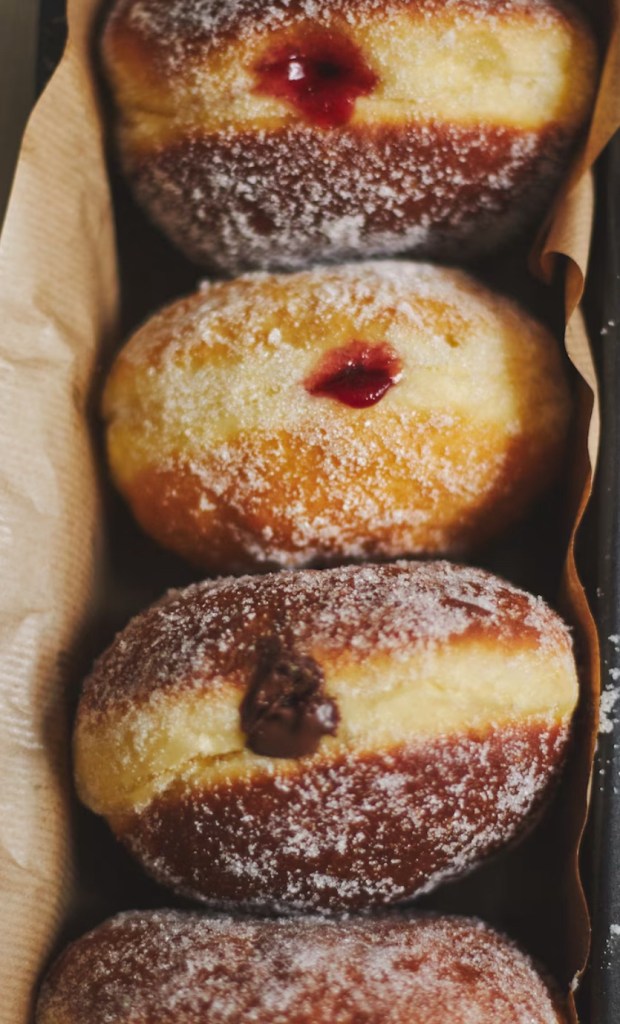
Here’s an elevated take on the classic jelly doughnut—with a richer dough, a punchier homemade fruit filling, and a hint of citrus zest to balance the sweetness. This modernized version is inspired by artisan bakery trends while still honoring the pillowy, nostalgic goodness of the original.
🍓 Brioche Jelly Doughnuts with Raspberry-Lemon Filling
(A modern twist on a beloved classic)
Makes: 10–12 doughnuts
Prep Time: 30 minutes
Rise Time: 2 hours + optional overnight
Cook Time: 15 minutes
🧈 Ingredients
For the Brioche Dough:
2 1/4 tsp (1 packet) active dry yeast
1/2 cup whole milk, warm (100–110°F / 38–43°C)
3 tbsp granulated sugar
2 3/4 cups all-purpose flour
1/2 tsp salt
3 large eggs
1 tsp vanilla extract Zest of 1 lemon (optional but recommended)
1/2 cup unsalted butter, softened and cut into cubes
Oil for frying (vegetable or canola)
For the Raspberry-Lemon Filling:
1 1/2 cups fresh or frozen raspberries
1/3 cup sugar (adjust to taste)
1 tbsp lemon juice
1 tsp lemon zest
1 tbsp cornstarch + 1 tbsp water (slurry)
For Finishing:
Superfine sugar for rolling Optional: powdered sugar for dusting
🍳 Instructions
1. Make the Dough
In a mixing bowl, combine warm milk, yeast, and sugar. Let stand 5–10 minutes until foamy. Add flour, salt, eggs, vanilla, and lemon zest. Mix with a dough hook or by hand until combined. Gradually add softened butter, a few cubes at a time, and knead for 8–10 minutes until smooth and slightly tacky. Transfer to a greased bowl, cover, and let rise for 1–2 hours at room temperature, or overnight in the fridge for better flavor.
2. Prepare the Raspberry Filling
In a saucepan over medium heat, combine raspberries, sugar, lemon juice, and zest. Cook for 5–7 minutes, mashing berries slightly. Stir in cornstarch slurry. Cook until thickened. Strain through a fine sieve if you want a seedless filling. Let cool and refrigerate.
3. Shape the Doughnuts
Roll out chilled dough to about 1/2-inch thick. Cut into 3-inch rounds and place on parchment. Cover and let rise again for about 45–60 minutes, until puffy.
4. Fry the Doughnuts
Heat oil to 350°F (175°C). Fry doughnuts in batches for about 1–2 minutes per side, until deep golden brown. Drain on paper towels or a wire rack. Roll in superfine sugar while warm.
5. Fill the Doughnuts
Use a paring knife or chopstick to make a small hole in the side. Spoon the filling into a piping bag or squeeze bottle. Pipe in about 1–2 tablespoons of raspberry-lemon filling per doughnut.
✨ Optional Gourmet Twists
Add rose water or vanilla bean paste to the raspberry filling for an aromatic profile. Swap filling: Use passionfruit curd, mango-lime jam, or blackberry-thyme compote. Sugar blend: Mix superfine sugar with ground freeze-dried raspberries for a pink coating.
❤️ Why It Works
This version upgrades the classic jelly doughnut with brioche dough for a richer bite, fresh berry-lemon jam for brightness, and a delicate sugar crust instead of the traditional powdered sugar overload. It hits sweet, tart, and buttery notes all at once—balancing comfort with culinary flair.

The classic Krispy Kreme doughnut is famous for its airy, melt-in-your-mouth texture and ultra-sweet glaze. An updated version can honor that original lightness while upgrading flavor complexity and quality of ingredients, giving it a more gourmet, small-batch feel without losing the iconic appeal.
🍩 Next-Gen Krispy-Style Doughnuts
An elevated take on the original hot-glazed classic
Makes: 12–14 doughnuts
Prep Time: 25 minutes
Rise Time: 2–3 hours (total)
Cook Time: 15 minutes
🧈 Ingredients
For the Dough:
2 1/4 tsp (1 packet) active dry yeast
3/4 cup whole milk, warm (100–110°F / 38–43°C)
2 tbsp granulated sugar
2 tbsp honey (adds moisture and complexity)
2 1/2 cups bread flour (or AP flour + 1 tbsp vital wheat gluten for a lighter crumb)
1/2 tsp salt
1/4 tsp ground nutmeg (classic secret ingredient)
2 large egg yolks
2 tbsp unsalted butter, softened
1 tsp vanilla bean paste (or pure vanilla extract)
Zest of half an orange (optional—but adds subtle brightness)
For Frying:
Neutral oil (like canola or grapeseed), enough for deep frying
For the Glaze:
2 cups powdered sugar, sifted
1/4 cup whole milk, warm
1 tsp vanilla bean paste
Pinch of salt
Optional: 1 tbsp melted butter (for extra richness)
🍳 Instructions
1. Make the Dough
In a bowl, combine warm milk, sugar, honey, and yeast. Let sit for 5–10 minutes until foamy. Add flour, salt, nutmeg, orange zest (if using), egg yolks, and vanilla. Mix until a rough dough forms. Add the softened butter and knead (by hand or with a dough hook) for 8–10 minutes until smooth, elastic, and slightly tacky. Transfer dough to a greased bowl, cover, and let rise for 1 to 1.5 hours until doubled.
2. Shape the Doughnuts
Roll out dough to about 1/2-inch thick on a lightly floured surface. Cut out 3-inch circles with a 1-inch center hole. Save the holes! Place on parchment-lined trays, cover loosely, and let rise again for 45–60 minutes until very puffy and jiggly.
3. Fry the Doughnuts
Heat oil to 350°F (175°C). Fry 2–3 doughnuts at a time for about 45–60 seconds per side, until golden and puffed. Drain on a rack over paper towels.
4. Make the Glaze
In a bowl, whisk together powdered sugar, warm milk, vanilla bean paste, salt, and optional melted butter. Glaze should be pourable but thick enough to coat.
5. Glaze While Warm
Dip warm doughnuts into the glaze, flipping to coat fully. Let excess drip off, then rest on a wire rack to set for 10–15 minutes.
🧠 Why This Works
Bread flour or added gluten improves chew and airiness. Honey and yolks give the dough softness and a slight richness. Nutmeg + vanilla bean nod to Krispy Kreme’s signature flavor. Warm glaze dip creates the perfect translucent, shiny finish that hardens slightly—just like the original.
✨ Optional Modern Variations
Brown butter glaze: Swap butter into the glaze for a nutty twist. Salted caramel drizzle: Add on top after the glaze sets for layered sweetness. Maple or matcha glazes: Replace the vanilla in the glaze base. Infuse dough with a touch of Earl Grey or chamomile for floral complexity.
This updated Krispy-style doughnut respects the light texture and sugary glaze everyone loves, but uses higher-quality ingredients and a few small tweaks to deepen the flavor. It’s perfect for bakers who love the classic but want something just a bit more special—and maybe a little less cloying.

Here’s a baked version of the updated Krispy Kreme-style doughnut—lighter, slightly healthier, but still rich, fluffy, and full of that signature vanilla-sweet flavor. Then I’ll include a filled variant that uses the same dough base with a luscious crème filling.
🍩 Baked Krispy-Style Doughnuts
Lighter, fluffier, oven-baked version of the classic
Makes: 12 doughnuts
Prep Time: 25 minutes
Rise Time: 1.5–2 hours
Bake Time: 10–12 minutes
🧈 Ingredients (Same Dough as Fried Version)
(see previous recipe, no changes needed to the dough)
Special Note:
Because the dough is enriched (egg yolks, honey, butter), it bakes beautifully—soft and airy with a golden edge.
🔥 To Bake Instead of Fry:
Follow the dough and shaping steps from the fried version. Preheat oven to 375°F (190°C). Place doughnuts on a parchment-lined baking sheet. Let them rise until puffy. Brush lightly with milk or melted butter (for a golden finish). Bake 10–12 minutes until lightly golden on top (don’t overbake or they’ll dry out). Let cool slightly, then dip in glaze while warm.
✅ Bonus Tip: After glazing, cover with a bowl for 2–3 minutes—this softens the glaze and mimics the Krispy Kreme “melt” effect.
🥄 Crème-Filled Doughnut Variant (Vanilla Bean Pastry Cream)
Use same dough, skip the hole, and pipe with a smooth filling
💡 To Shape for Filling:
Roll dough 1/2-inch thick. Cut into 3-inch rounds without the hole. Let rise and either fry or bake as above.
🍮 Vanilla Bean Pastry Cream Filling
Ingredients:
1 1/2 cups whole milk
1/2 vanilla bean (or 1 tsp vanilla bean paste)
3 large egg yolks
1/3 cup sugar
2 tbsp cornstarch
2 tbsp unsalted butter
Directions:
Heat milk with scraped vanilla bean (or paste) until steaming—not boiling. In a bowl, whisk yolks, sugar, and cornstarch until pale. Slowly whisk hot milk into yolk mixture, then return to pot and cook over medium heat, whisking constantly, until thickened (about 2–3 minutes). Remove from heat, stir in butter, strain if lumpy. Chill completely, then pipe into doughnuts using a piping bag fitted with a narrow tip.
✨ Optional Variations:
Coffee cream filling: Add 1 tsp instant espresso to the milk while heating. Salted caramel crème: Fold in a spoonful of caramel sauce once cooled. Chocolate glaze topping: Dip the tops in ganache instead of vanilla glaze.
🎯 Summary
Variant Texture Glaze Filling
Baked Ring Light, fluffy, less greasy Vanilla bean glaze None
Filled Round Soft, pillowy. Optional sugar dust. Vanilla
pastry cream
Both versions keep the essence of Krispy Kreme: light dough, smooth vanilla sweetness, and melt-in-your-mouth softness—but with a modern baker’s touch.
 Not Your Grams Kitchen