

Angel Food Cake is a delicate, airy dessert known for its light texture and subtle sweetness. It has been a beloved treat in American baking for over a century, often associated with celebrations and family gatherings. But where did this unique cake originate, and how did it become a staple in American kitchens? Let’s explore the fascinating history of Angel Food Cake.
Origins and Early Mentions
The exact origins of Angel Food Cake remain uncertain, but many food historians believe it has roots in early American baking traditions of the 19th century. Some speculate that the cake may have evolved from earlier sponge cakes and similar desserts that relied on beaten egg whites for leavening rather than yeast or baking powder.
The first known published recipes resembling Angel Food Cake appeared in American cookbooks in the 1800s. One of the earliest references is in The Home Messenger Book of Tested Recipes, published in 1878 by Isabella Stewart, which included a recipe for a “Snow-Drift Cake.” By the late 19th century, Angel Food Cake recipes were becoming more common, particularly in cookbooks from Pennsylvania, leading some historians to suggest that it may have originated in the Pennsylvania Dutch region.
Why the Name “Angel Food”?
The name “Angel Food Cake” is said to reflect its light and airy texture, making it seem almost heavenly. The cake’s pure white color, achieved by using only egg whites, further contributed to its angelic reputation. Some believe the name may also have been a marketing strategy to highlight the cake’s ethereal qualities compared to heavier, richer desserts.
Rise in Popularity
By the late 19th and early 20th centuries, Angel Food Cake became a popular dessert across the United States. It was favored for its simplicity, requiring only a few ingredients: egg whites, sugar, flour, and cream of tartar. The cake was also appealing because it did not use butter or oil, making it a lighter alternative to traditional cakes.
The invention of hand-cranked egg beaters in the 1860s and electric mixers in the early 20th century made it easier for home bakers to whip egg whites to the necessary stiff peaks, further increasing the cake’s popularity. In the 1920s and 1930s, boxed cake mixes, including Angel Food Cake mix, became available, making it even more accessible.
Cultural Significance and Modern Variations
Angel Food Cake has remained a staple in American households, often served at special occasions such as birthdays, weddings, and holidays. It is frequently paired with fresh fruit, whipped cream, or chocolate sauce. Some variations include flavored versions, such as lemon or almond, or the addition of cocoa to create a “Devil’s Food Angel Cake” contrast.
Today, Angel Food Cake continues to be a favorite for those seeking a lighter dessert option. Its fat-free composition makes it popular among health-conscious bakers, and it remains a classic choice for summer gatherings.
Angel Food Cake has a rich history that spans over a century, from its humble origins in American kitchens to its status as a beloved dessert. Its light, airy texture and versatility have made it a timeless favorite, proving that sometimes, the simplest recipes create the most heavenly treats.
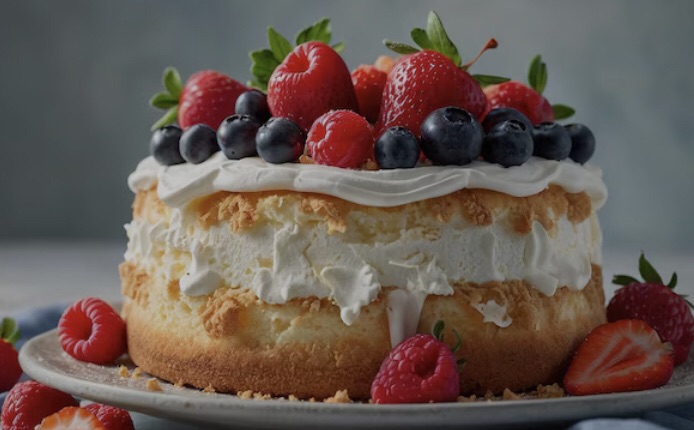
Classic Angel Food Cake Recipe
Angel Food Cake is known for its light, fluffy texture and delicate sweetness. This classic recipe requires careful handling of egg whites to achieve its signature airy structure.
Ingredients:
• 1 cup (120g) cake flour, sifted
• 1 1/2 cups (300g) granulated sugar, divided
• 12 large egg whites, room temperature
• 1 1/2 teaspoons cream of tartar
• 1/4 teaspoon salt
• 1 1/2 teaspoons pure vanilla extract
• 1/2 teaspoon almond extract (optional)
Instructions:
1. Prepare the Oven and Pan
Preheat your oven to 350°F (175°C). Use an ungreased 10-inch (25 cm) tube pan with a removable bottom. Do not grease the pan—this helps the cake rise properly.
2. Sift the Dry Ingredients
In a medium bowl, sift together the cake flour and 1/2 cup of the sugar. Repeat the sifting process two more times to ensure a light and airy texture. Set aside.
3. Whip the Egg Whites
In a large mixing bowl, beat the egg whites on medium speed until foamy. Add the cream of tartar and salt, then increase the speed to medium-high. Gradually add the remaining 1 cup of sugar, one tablespoon at a time, while beating. Continue to whip until soft peaks form. The mixture should be glossy and hold its shape but not be overly stiff.
4. Add Flavoring
Gently fold in the vanilla extract and almond extract (if using), taking care not to deflate the egg whites.
5. Fold in the Dry Ingredients
Using a fine-mesh sieve, sift a small amount of the flour mixture over the whipped egg whites. Gently fold it in using a rubber spatula, making slow, sweeping motions to maintain the airiness. Repeat until all the flour is incorporated, being careful not to overmix.
6. Transfer to the Pan
Pour the batter into the ungreased tube pan and smooth the top with a spatula. Run a knife through the batter to remove air pockets.
7. Bake
Bake for 35–40 minutes, or until the top is golden brown and springs back when lightly touched. Avoid opening the oven door too early, as this can cause the cake to collapse.
8. Cool Upside Down
Immediately invert the pan onto a bottle or cooling rack. Let the cake cool completely in the pan for about 1 1/2 to 2 hours. This prevents it from collapsing as it sets.
9. Remove and Serve
Once cooled, run a thin knife around the edges of the pan to loosen the cake. Gently remove it from the pan and place it on a serving plate.
Serving Suggestions:
• Dust with powdered sugar
• Serve with fresh berries and whipped cream
• Drizzle with a light glaze or chocolate sauce
This homemade Angel Food Cake is delightfully airy and perfect for any occasion!
 Not Your Grams Kitchen