

Few cakes hold as much cultural and culinary significance as the Victorian Sponge, a beloved classic that has remained a staple of British afternoon tea for over a century. Named after Queen Victoria, this cake is known for its light and airy texture, paired with a sweet filling of jam and cream. In this article, we explore the origins of the Victorian Sponge, its evolution, and why it remains a favorite today.
Origins of the Victorian Sponge Cake
The Victorian Sponge cake owes its name and popularity to Queen Victoria (1819–1901), who was known for her love of afternoon tea. The practice of afternoon tea became fashionable in the early 1840s, largely attributed to Anna, the Duchess of Bedford, a close friend of the Queen. Anna introduced the idea of a light meal with tea, sandwiches, and cakes to bridge the gap between lunch and dinner. Queen Victoria soon adopted this custom, making it a daily ritual at her residences, including Osborne House on the Isle of Wight.
During this period, cakes were evolving due to significant advancements in baking technology. The invention of baking powder in 1843 by English chemist Alfred Bird was a game-changer. Before its introduction, cakes relied on yeast for leavening, which resulted in a denser texture. Baking powder allowed for the creation of a much lighter and fluffier cake, paving the way for the sponge cake we know today.
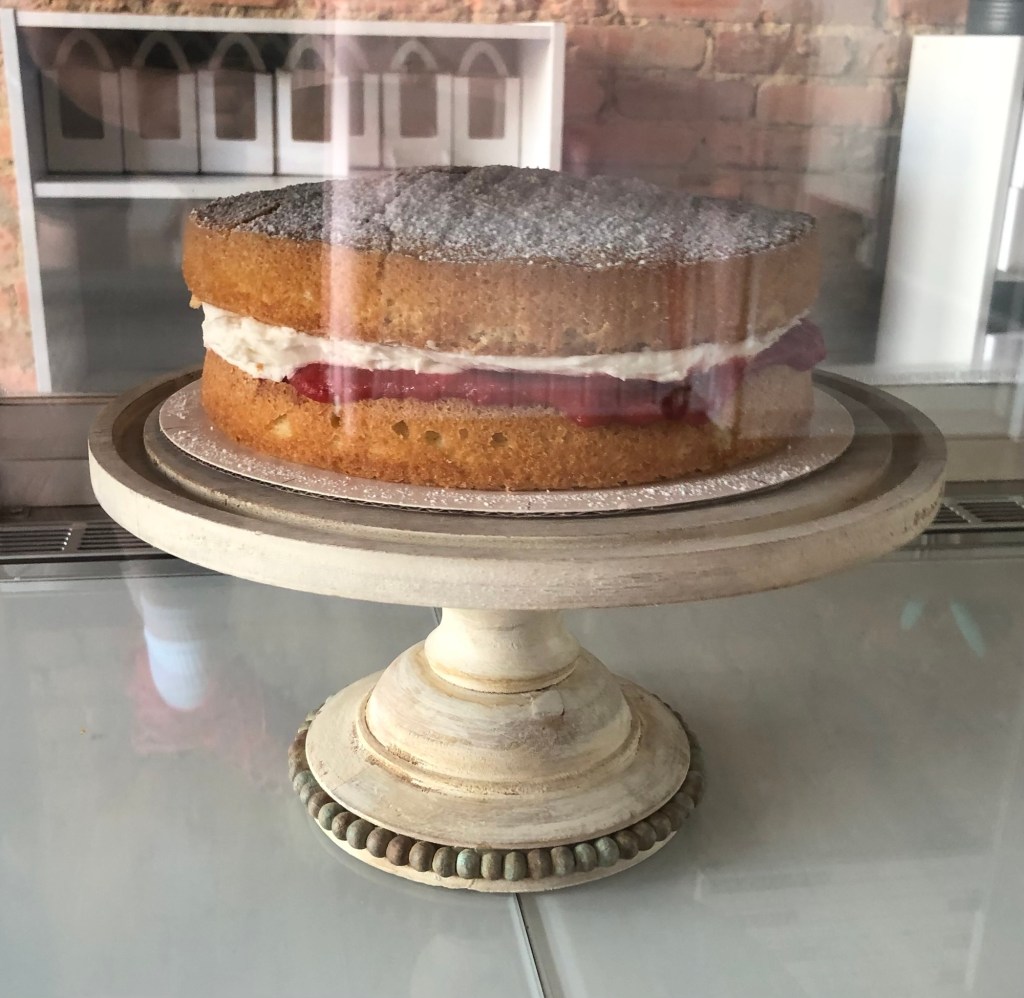
The Victorian Sponge, sometimes referred to as a Victoria Sandwich, was developed using this new leavening method. Traditionally, it consists of two layers of sponge cake, filled with raspberry or strawberry jam and optionally fresh cream or buttercream, with a light dusting of powdered sugar on top.
Evolution and Variations
While the original Victorian Sponge was a simple, elegant cake, it has undergone various adaptations over the years.
1. The Traditional Victoria Sandwich – The classic version consists of equal parts butter, sugar, eggs, and flour (known as the “equal weight” method), with jam as the only filling. Some purists argue that adding cream deviates from tradition.
2. The Modern Victorian Sponge – Today, many bakers include whipped cream or buttercream alongside jam, creating a richer texture. Some variations use different fruit jams, lemon curd, or even chocolate fillings.
3. Mini Victoria Sponges and Cupcakes – Modern adaptations include individual-sized Victoria sponges, often served as cupcakes or petit fours for elegant tea parties and celebrations.
4. Healthier and Gluten-Free Versions – With the rise of dietary-conscious baking, alternative ingredients like almond flour, gluten-free flour, and reduced-sugar recipes have emerged to cater to different dietary needs.
The Victorian Sponge in British Culture
The Victorian Sponge remains a quintessential part of British tea culture. It is a common feature at afternoon teas, garden parties, and village fetes. The cake’s simplicity, combined with its timeless appeal, has made it a favorite for generations.
It has also played a significant role in British baking competitions. The Great British Bake Off often features the Victoria Sponge as a challenge, testing contestants on their ability to achieve a light, even bake with a perfect balance of flavors.
How to Make the Perfect Victorian Sponge
If you want to recreate this classic at home, follow this simple recipe:
Ingredients:
• 200g (7oz) unsalted butter, softened
• 200g (7oz) caster sugar
• 4 large eggs
• 200g (7oz) self-raising flour
• 1 tsp vanilla extract
• 2 tbsp milk (optional, for moisture)
• 200g (7oz) raspberry or strawberry jam
• 150ml (5oz) double cream, whipped (optional)
• Icing sugar for dusting
Instructions:
1. Preheat your oven to 180°C (350°F) and grease two 8-inch cake tins. Line with parchment paper.
2. Cream the butter and sugar together until pale and fluffy.
3. Add the eggs one at a time, mixing well after each addition. Stir in the vanilla extract.
4. Sift in the self-raising flour and gently fold into the mixture. If needed, add a little milk to maintain a soft consistency.
5. Divide the batter evenly between the two tins and smooth the tops.
6. Bake for 20–25 minutes until golden and springy to the touch.
7. Allow the cakes to cool in the tins for 10 minutes before transferring them to a wire rack.
8. Once cooled, spread jam on one sponge and add whipped cream (if using). Place the second sponge on top and dust with icing sugar.
9. Slice and serve with a cup of tea!
The Victorian Sponge cake is more than just a dessert—it is a symbol of British tradition, hospitality, and the art of simple yet elegant baking. Whether enjoyed at an afternoon tea, a birthday celebration, or a casual gathering, its timeless charm continues to captivate bakers and cake lovers alike.
 Not Your Grams Kitchen