

Soda bread is one of the most well-known traditional breads, particularly associated with Ireland. Simple yet flavorful, it relies on baking soda as a leavening agent instead of yeast, making it an accessible and quick bread to prepare. Despite its strong connection to Irish culture, soda bread has a more complex history that extends beyond the Emerald Isle.
Origins of Soda Bread
The technique of using a chemical leavening agent instead of yeast dates back centuries, but it wasn’t until the early 19th century that soda bread, as we know it today, became common. The key ingredient—baking soda (sodium bicarbonate)—was first developed as a leavening agent in the late 18th century. However, it wasn’t widely used in baking until the early 1800s when commercial production of baking soda began.
Native American tribes are believed to have been among the first to use a natural form of soda (potash) to leaven bread. They mixed pearl ash, an alkaline substance derived from wood ash, with cornmeal to make a simple, unleavened bread. European settlers in North America later adopted this technique, which laid the foundation for modern soda bread.
The Rise of Soda Bread in Ireland
While baking soda became popular in various countries, it was in Ireland that soda bread truly flourished. By the 1830s, baking soda was widely available, and Irish bakers quickly adopted it as a key ingredient.
Several factors contributed to the rapid rise of soda bread in Ireland:
1. Soft Wheat Flour: Ireland’s climate was better suited for growing soft wheat, which has a lower gluten content than the hard wheat used in traditional yeast-based bread. Soft wheat works well with baking soda, making it an ideal match for soda bread.
2. Economic Hardship: During the 19th century, Ireland faced extreme poverty and food shortages, particularly during the Great Famine (1845–1852). Soda bread required only a few inexpensive ingredients—flour, baking soda, salt, and buttermilk—making it an accessible staple for many families.
3. Ease of Preparation: Unlike yeast bread, which requires time for rising and proofing, soda bread could be made quickly and baked over an open fire or on a griddle. This convenience made it a practical choice for households with limited resources.
Traditional Irish Soda Bread Variations
Over time, different regions in Ireland developed their own variations of soda bread, influenced by local preferences and available ingredients.
• Brown Soda Bread: Made with wholemeal flour instead of white flour, this variation is heartier and has a richer, nuttier flavor. It is a staple in many Irish homes.
• White Soda Bread: Made with plain white flour, this is the most traditional form of soda bread. It has a light texture and a slightly tangy taste from the buttermilk.
• Farls: In Northern Ireland, soda bread is often cooked on a griddle in thick, triangular sections known as farls. These are common in an Ulster fry, a traditional Irish breakfast.
• Spotted Dog: This sweet variation includes raisins or currants, adding a hint of natural sweetness to the bread.
Symbolism and Traditions
Soda bread is more than just a food item—it holds cultural and symbolic significance in Ireland. Traditionally, a cross was cut into the top of the bread before baking. Some say this was done to allow the bread to rise evenly, but many Irish families believed it was to “let the devil out” and bless the bread.
Soda bread is also commonly associated with family traditions and holidays. It is often served on St. Patrick’s Day, and many Irish families have their own cherished recipes passed down through generations.
Soda Bread Today
Though modern baking has introduced a variety of breads and techniques, soda bread remains a beloved staple, especially in Ireland and among Irish communities worldwide. It is still enjoyed fresh with butter, alongside stews and soups, or toasted with jam for breakfast.
Today, artisanal and home bakers continue to experiment with soda bread, incorporating different flours, seeds, nuts, and even beer to create new versions while maintaining the spirit of this humble yet iconic bread.
Soda bread’s history is deeply tied to Irish culture, yet its origins and influence extend far beyond Ireland. Born out of necessity and ingenuity, it remains a simple, wholesome, and delicious testament to the resilience and resourcefulness of the people who baked it. Whether enjoyed in its classic form or with modern twists, soda bread continues to be a symbol of comfort and tradition in kitchens around the world.
Classic Irish Soda Bread Recipe
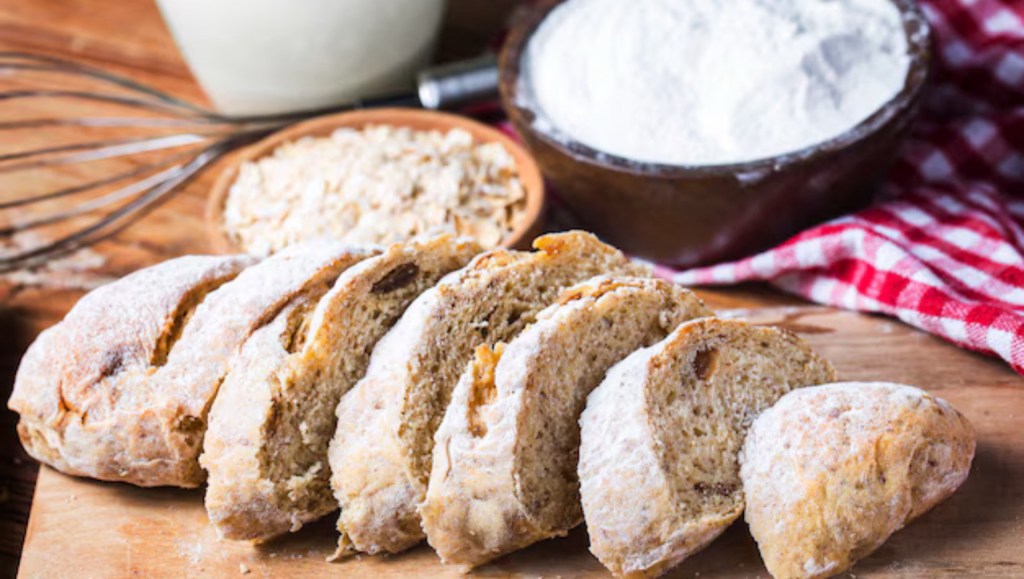
This traditional soda bread recipe is simple, requiring just a few basic ingredients. It produces a rustic, hearty loaf with a slightly tangy flavor and a soft interior. Perfect for serving with butter, jam, or alongside soups and stews.
Ingredients:
• 4 cups (500g) all-purpose flour (or a mix of white and wholemeal flour)
• 1 teaspoon baking soda
• 1 teaspoon salt
• 1¾ cups (400ml) buttermilk
Instructions:
1. Preheat the Oven:
Preheat your oven to 425°F (220°C). Lightly flour a baking sheet or line it with parchment paper.
2. Mix Dry Ingredients:
In a large mixing bowl, sift together the flour, baking soda, and salt. Stir to combine evenly.
3. Add Buttermilk:
Make a well in the center of the flour mixture and gradually pour in the buttermilk. Stir with a wooden spoon or your hands until a sticky dough forms.
4. Knead the Dough Lightly:
Turn the dough out onto a lightly floured surface and gently knead for about 30 seconds—just until it comes together. Avoid over-kneading, as this can make the bread dense.
5. Shape the Loaf:
Form the dough into a round loaf and place it on the prepared baking sheet. Using a sharp knife, cut a deep cross (about ½ inch deep) on top of the dough. This helps the bread bake evenly and, according to tradition, “lets the devil out.”
6. Bake:
Bake in the preheated oven for 30–40 minutes, or until the bread is golden brown and sounds hollow when tapped on the bottom.
7. Cool and Serve:
Transfer the loaf to a wire rack and let it cool for at least 10 minutes before slicing. Serve warm with butter or jam.
Tips for the Best Soda Bread:
• If you don’t have buttermilk, you can make a substitute by mixing 1¾ cups of milk with 1 tablespoon of lemon juice or white vinegar. Let it sit for 5–10 minutes before using.
• For a richer flavor, use half wholemeal flour and half all-purpose flour.
• If you prefer a softer crust, wrap the warm bread in a clean kitchen towel as it cools.
Enjoy your homemade soda bread fresh, or toast it the next day for a delicious treat!
Cheddar and Green Onion Soda Bread

This savory twist on classic soda bread features sharp cheddar cheese and fresh green onions, adding a rich, cheesy flavor with a hint of freshness. It’s perfect served warm with butter or alongside soups and stews.
Ingredients:
• 3 ½ cups (440g) all-purpose flour
• 1 teaspoon baking soda
• 1 teaspoon salt
• 1 ½ cups (170g) sharp cheddar cheese, grated
• 4 green onions, finely chopped
• 1 ¾ cups (400ml) buttermilk
Instructions:
1. Preheat the Oven:
Preheat your oven to 400°F (200°C). Line a baking sheet with parchment paper or lightly flour it.
2. Mix Dry Ingredients:
In a large bowl, whisk together the flour, baking soda, and salt. Stir in the grated cheddar cheese and chopped green onions, ensuring they are evenly distributed.
3. Add Buttermilk:
Make a well in the center of the dry ingredients and gradually pour in the buttermilk. Mix with a wooden spoon or your hands until a soft, slightly sticky dough forms.
4. Shape the Dough:
Turn the dough onto a lightly floured surface and gently knead it a few times—just enough to bring it together. Shape it into a round loaf.
5. Score the Bread:
Place the dough on the prepared baking sheet and use a sharp knife to cut a deep cross (about ½ inch deep) on top.
6. Bake:
Bake for 35–40 minutes, or until the bread is golden brown and sounds hollow when tapped on the bottom.
7. Cool and Serve:
Let the bread cool slightly on a wire rack before slicing. Serve warm with butter or as a side to soups and stews.
Tips for the Best Cheddar and Green Onion Soda Bread:
• Use extra-sharp cheddar for a more pronounced cheesy flavor.
• For a softer crust, wrap the warm bread in a clean kitchen towel while it cools.
• Add a pinch of black pepper or dried herbs (like thyme or rosemary) for extra flavor.
Enjoy this cheesy, savory soda bread warm or toasted the next day!
 Not Your Grams Kitchen